
Insights
What to Do When Your Steel Fabrication Subcontractor Goes Out of Business | Alternative Supplier Selection Checklist
A long-term subcontractor went out of business. You have the drawings and data on hand. Still, you can't find an alternative—this is not uncommon in the world of steel fabrication. There should be other companies that can produce according to the drawings, so why can't you find one? We've organized what to check to find a suitable replacement into a checklist.
Conclusion: What's Not Written in the Drawings Is Lost
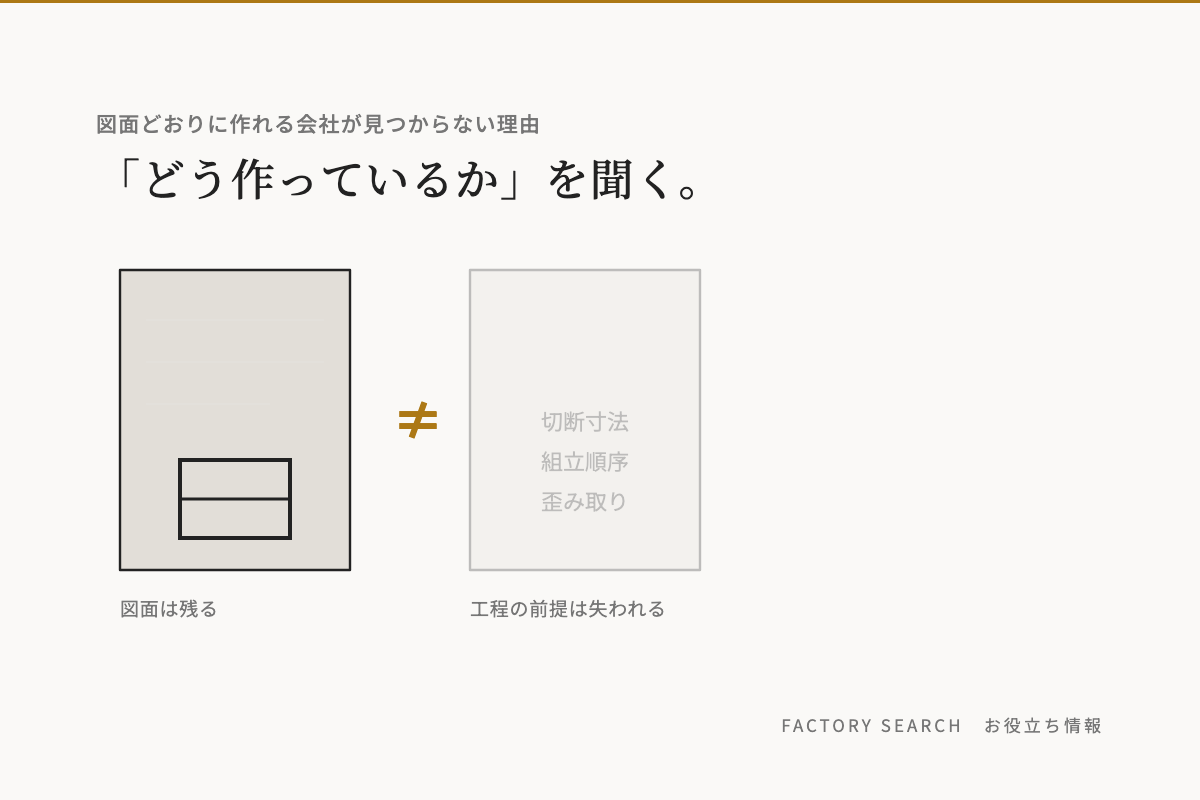
Long-term subcontractors have assumptions that are not written in the drawings. How to account for material lot differences, in what order to assemble, which dimensions to prioritize. These were not in the drawings, but within the company's processes. This is the part that is lost when they go out of business.
Therefore, when looking for an alternative, don't just ask if they can "read drawings," but rather, look for "whether they have processes that can achieve the same precision."
Common Stumbling Blocks
- Quotations are provided, but the diagonals of the delivered product don't match
- Individual units are fine, but the overall length doesn't match when assembled in a row
- Rejected because the size is too large or the quantity is too small
- They cannot handle re-drilling holes after plating
- You end up with a company that doesn't even handle structural steel
6 Items to Check
1. Compatible Sizes and Weight
This is the initial screening criterion. Ask for specific numbers: "Up to how many mm for a single face?" and "Up to how many kg in weight?" Beyond equipment capacity, it's also important whether they have enough space to place assembled parts and check precision. Asking about the welding space size can reveal their actual capabilities.
2. Sizes of Structural Steel Handled
Whether they regularly handle angle steel and channel steel. What sizes are their specialty? If a company publishes a list of compatible structural steel sizes, you can judge from that.
For how to interpret sizes, please refer to "What is Angle Steel" and "What is Channel Steel".
3. How Tolerances Are Achieved
This is the main point. Instead of asking "What is the tolerance in mm?", ask "How do you achieve that tolerance?" Do they account for material lot differences, how do they determine cutting dimensions, and do they have a final distortion removal process? Companies that can answer these questions have established processes.
When assembling in a row, ask separately about individual unit tolerance and overall length precision when assembled in a row. Even if individual units meet specifications, errors accumulate the moment they are connected. There are actual examples where individual unit tolerance and overall length precision for 10-face assembly are published separately.
4. Surface Treatment and Post-Processing Scope
Whether they can handle baking paint or hot-dip galvanizing. And whether they can accept jobs including re-drilling holes and re-tapping after plating. If this is not included, you will have to rework the returned products in-house.
"Problem of Holes Clogging in Hot-Dip Galvanizing" is covered in detail.
5. Minimum Quantity
Can they accept orders from a single unit? This is crucial for prototyping and repair parts. Companies focused on mass production may refuse single-unit orders.
6. Material Procurement Method
Do they cut from standard length materials in-house, or do they purchase pre-cut materials? Companies that can cut from standard lengths in-house can determine cutting dimensions based on actual material measurements. This makes a difference in jobs requiring high precision.
Checklist
| Check Item | How to Ask |
|---|---|
| Maximum Compatible Dimensions/Weight | Up to how many mm x how many mm x how many mm for a single face? What is the weight limit? |
| Welding Space | Is there enough space to check precision while assembled? |
| Structural Steel Compatible Sizes | What are the ranges for equal-leg, unequal-leg, and channel steel, respectively? |
| Individual Unit Tolerance | What is it, and how is it achieved? |
| Overall Length Precision for Assembled Rows | How many mm for how many connected faces? Separately from individual unit tolerance. |
| Distortion Removal Process | Do they finish angles, diagonals, and overall length in the final process? |
| Inspection Items | Besides outer dimensions and holes, do they check angles and diagonals? |
| Surface Treatment | Compatibility with painting/plating and scope of post-plating processing |
| Minimum Quantity | Can they accept orders from a single unit? |
| Material Procurement | Do they cut from standard lengths in-house, or buy pre-cut materials? |
| Confidentiality | Can they sign an NDA? |
| Delivery | Do they offer nationwide delivery? Is partial delivery possible? |
How to Proceed with Transferring Production
- Do not start with the most difficult part number. First, try with a medium-difficulty item to confirm how they achieve precision.
- Identify assumptions not written in the drawings. If possible, ask the former subcontractor's staff while they are still available.
- Determine and communicate the prioritized dimensions. The manufacturing side cannot decide whether to prioritize overall length, diagonal, or hole pitch.
- Always include the number of faces for assembled rows. Accumulation cannot be accounted for with individual unit drawings alone.
- Clearly specify inspection items for the first order. Write down what you want them to measure and deliver.
Summary
- What is lost is not the drawings, but the process assumptions not written in the drawings.
- Instead of asking "What is the tolerance in mm?", ask "How is it achieved?"
- Confirm individual unit tolerance and overall length precision for assembled rows separately.
- Whether they can handle post-plating processing changes your in-house effort.
- Minimum quantity and space to measure assembled parts can be used as early screening criteria.
- Start the transfer with part numbers of medium difficulty.
Frequently Asked Questions
- Q. I only have paper drawings, not CAD data.
- A. Many companies can create data from paper drawings. However, if you have the actual product, please show it along with the drawings. The actual manufacturing methods not captured in the drawings can sometimes be inferred from the physical product.
- Q. Should I look for a nearby company?
- A. Being close is advantageous for transportation costs and ease of meetings, but there are not many companies specializing in structural steel frames. Some companies offer nationwide delivery, so not limiting your search by region will increase your options.
- Q. The quotation is higher than my previous subcontractor's.
- A. Initial orders may include setup costs. Also, the efficiencies gained by your previous subcontractor over years of familiarity cannot be immediately matched. The difference will narrow if you transfer part numbers with larger quantities first.
- Q. Should I split orders among multiple companies?
- A. While this diversifies supply risk, splitting precision-requiring assembled products can blur the scope of responsibility. It is more practical to establish with one company first and then consider a second one once stable.
Related articles
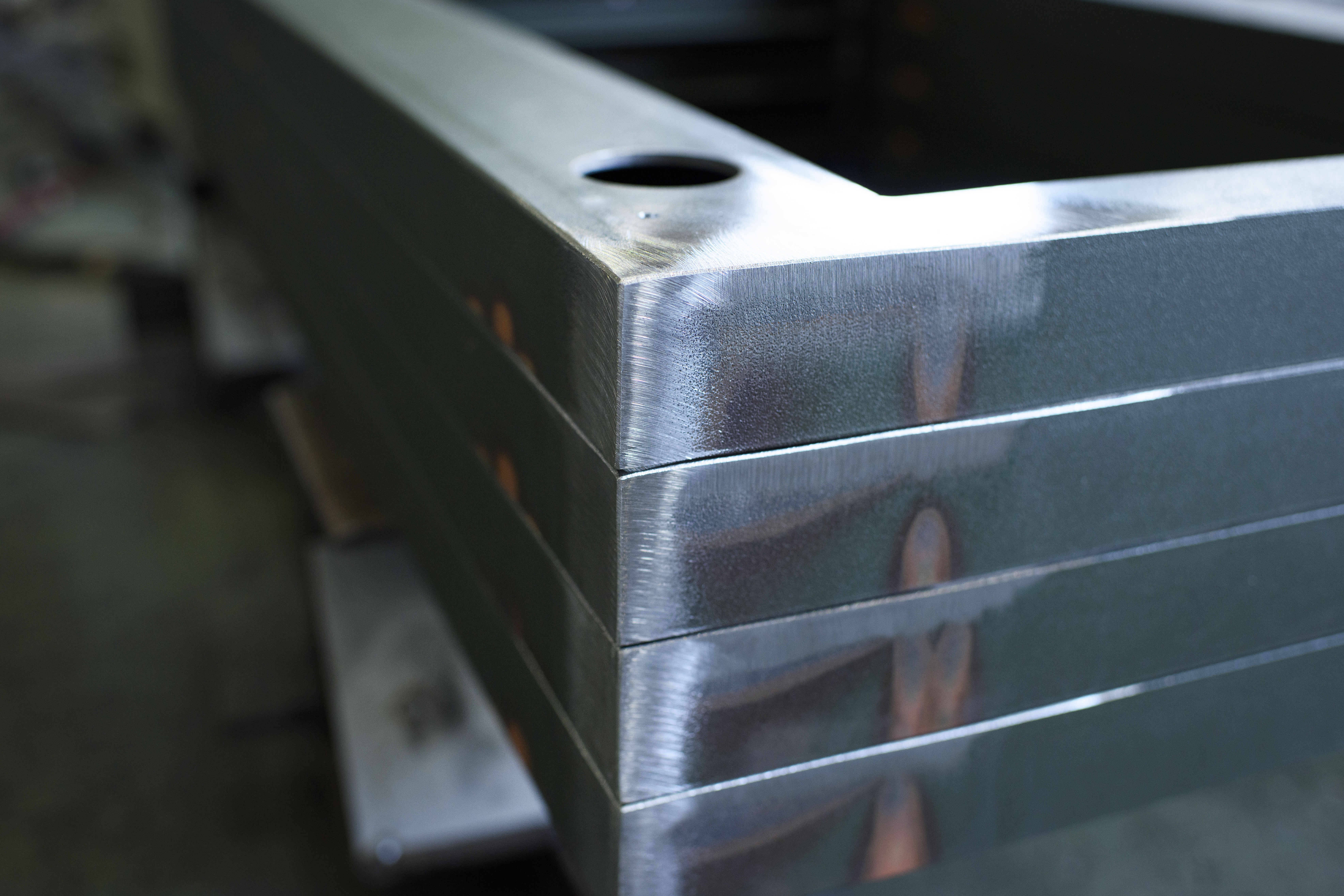
Industrial Angle Frame Manufacturing
Manufacturing of angle frames and stands for distribution boards and cubicle enclosures. E…