Unrivaled painting tech from dedicated research.
Branding unique skills
for regional revitalization.
-
SANTAI Co., Ltd. (SANTAI)
- Guitar manufacturing and development, electric guitar repair, painting, Matsumoto Keisei-nuri manufacturing
Yuya Furuhata
- Prefecture
- Nagano
- Business Activities
- Guitar manufacturing and development, electric guitar repair, painting, Matsumoto Keisei-nuri manufacturing
- Company Name
- SANTAI Co., Ltd. (SANTAI)
- Representative Name
- Yuya Furuhata
- Location
-
〒399-0702
1880-2 Murakakuma, Hirooka Nomura, Shiojiri-shi, Nagano, Japan
- Phone Number
- 0263-53-7000
- Website
Factory Stories
Santai's DNA, Passed Down for Over 100 Years
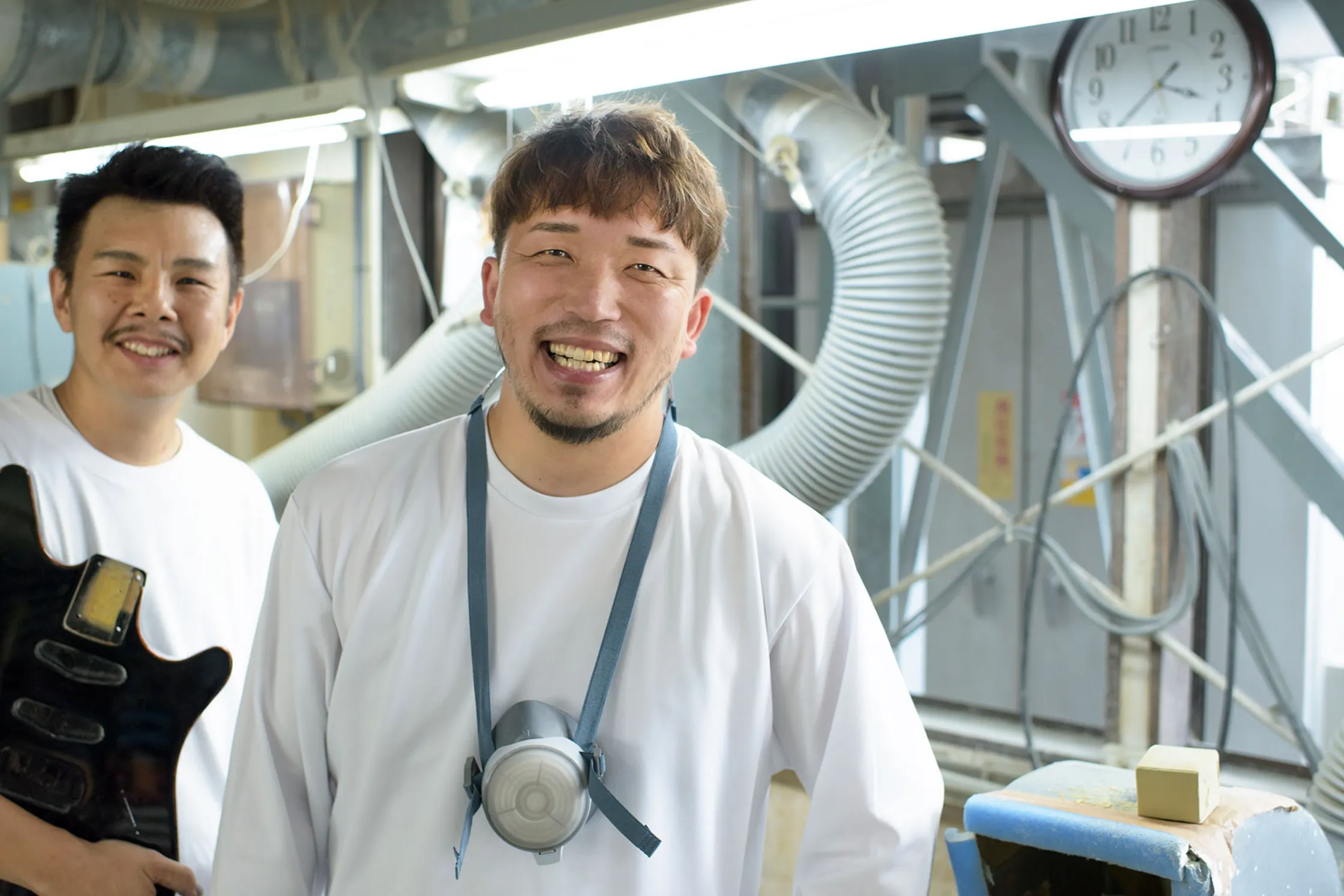
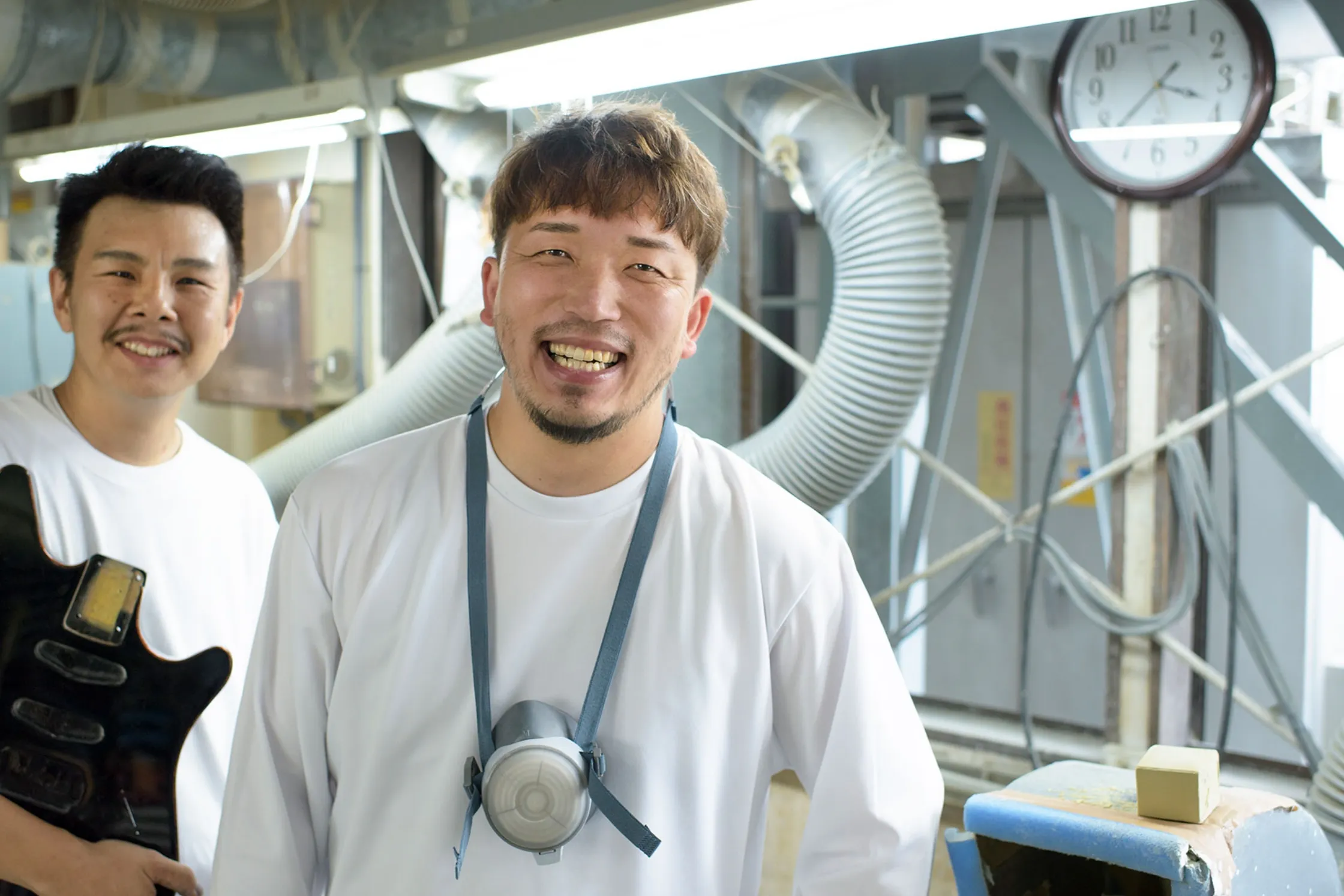
Santai Co., Ltd. engages in electric guitar painting, manufacturing and development of original guitars, and manufacturing of Matsumoto Keisei-nuri. It is a long-established company that has continued for over 100 years since its founding by Yuya Furuhata's great-grandfather, Kesawo, who established "Furuhata Lacquerware Shop" in Taisho 9 (1920). However, rather than words like "tradition" or "formality" typically associated with long-established businesses, "challenge" and "innovation" suit Santai better. Kesawo reportedly went to Matsumoto from Shiojiri as an apprentice at the age of 12. "Back then, there were no cars, so he apparently cried while looking at the mountains of Shiojiri." Given the historical context, Kesawo, who left home at a young age to acquire skills and became an independent lacquerware craftsman, must have truly been a person of challenge. "Actually, in 2022, we created an opportunity to trace back my father's (the third generation) memories and unearth his original experiences. As we unraveled our company's history, it always felt like we were taking on challenges."
The Challenges of Grandfather and Father
Kesawo's successor, his grandfather Kunio, shifted the business to electric guitar painting when electric guitar production became popular in Matsumoto City. "Lacquerware involves manufacturing and sales, so if you're not good at selling, you can't sell. But if you only focus on selling and can't produce the products, you can't sell them either. So, I think he wanted to cut out the 'selling' process completely to streamline operations." Grandfather Kunio took on the challenge of significantly changing both the business content and its structure, without altering the core principle of 'painting wood.' Then, his father, Masataka, created 'Matsumoto Keisei-nuri,' utilizing guitar painting techniques. This was an innovative approach that applied guitar painting techniques to lacquerware products such as trays and boxes. The series incorporating autumn leaves collected from the mountains of Shinshu also obtained a patent. Most lacquerware features shades of black, red, and gold. When colorful products are placed among them, they naturally catch the eye. "They sold very well as gifts, with a modern feel." In this way, they once again challenged the 'selling' process, which they had once let go of, with new products. However, it was temporarily suspended from sale as it could not be reconciled with electric guitar production.
Differences in "Wood Painting" Techniques Between Lacquerware and Guitars
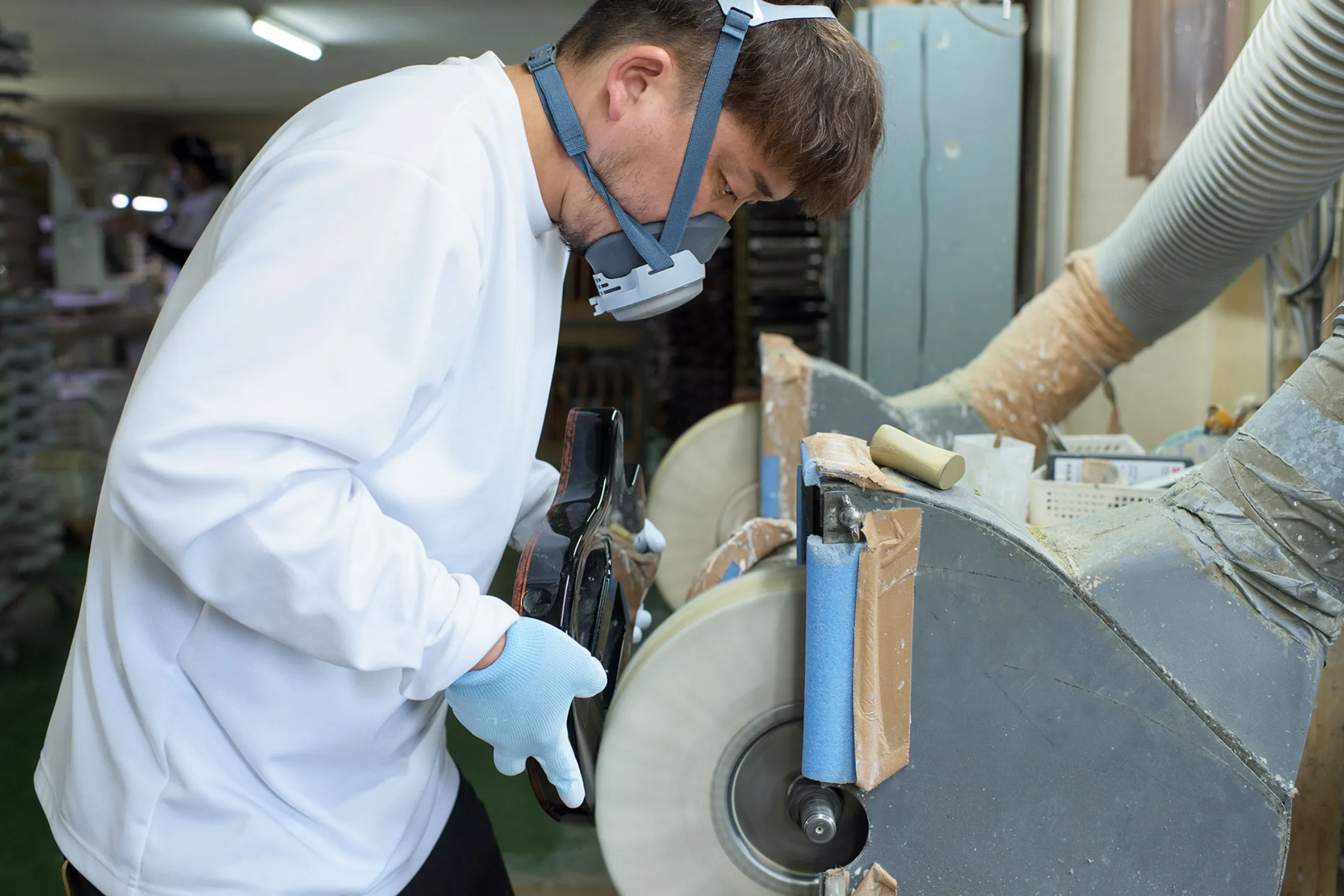
Santai has consistently engaged in 'wood painting' since its founding. However, it is said that even though it's the same painting, the content is completely different for lacquerware and guitars. "My grandfather apparently had a lot of trouble when he switched from lacquerware to guitars. The paints, painting methods, and tools were all different, so he had to completely change the equipment." Furthermore, the approach to painting differs between lacquerware and guitars. Guitars require a thicker coat of paint for protection and to correct wood shrinkage and warping. "For electric guitar painting, it's better to apply as thin a coat as possible for sound quality. It seems contradictory, but maintaining a balance between protection and sound quality is one of the techniques of guitar painting." Moreover, compared to general lacquerware, guitars have complex shapes to meet the diverse demands of users, which also presents a challenge.
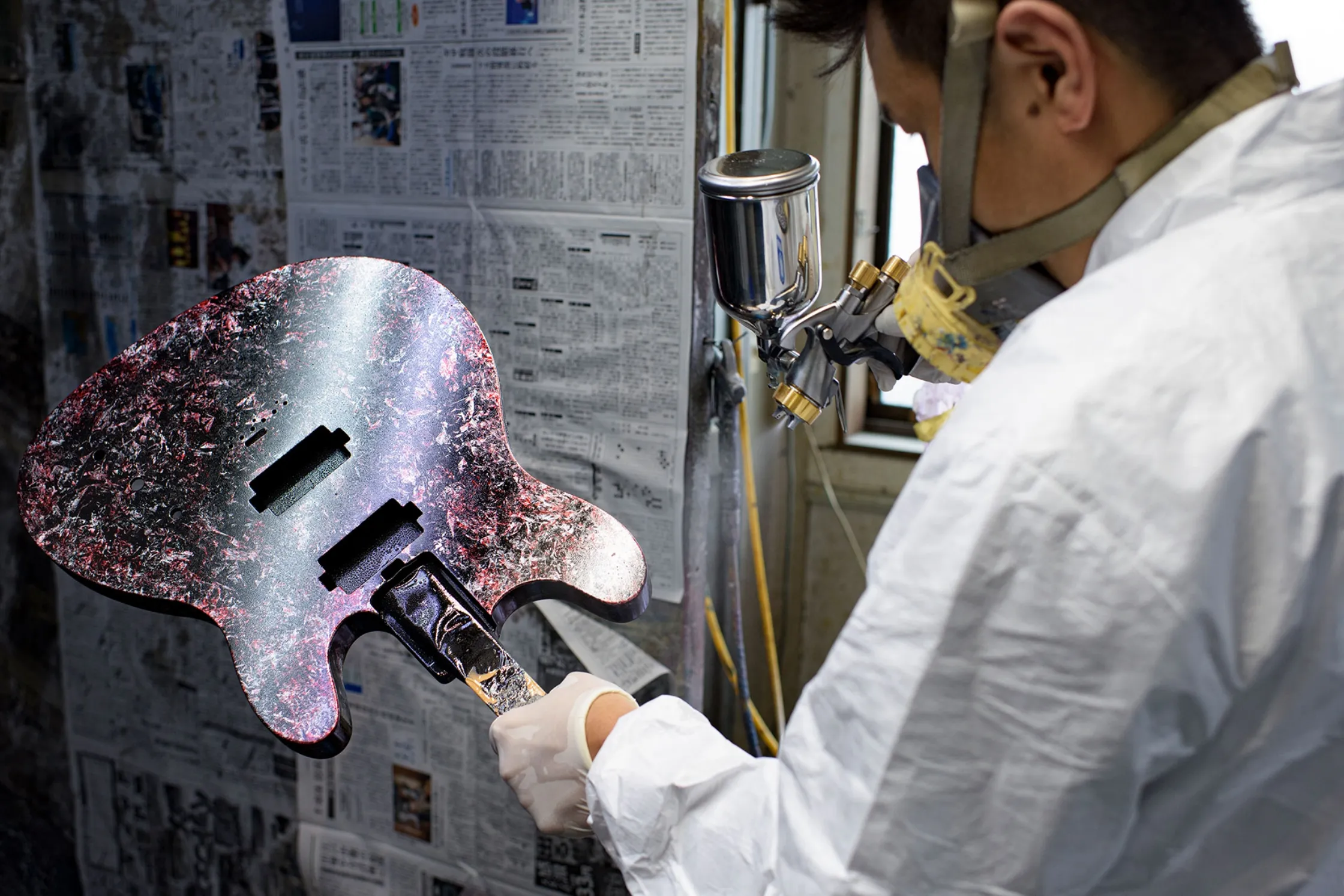
Creating Colors that Recreate the Customer's Vision
Color-related issues are common in guitar painting. "For example, a white with a bluish tint and a black with a reddish tint are completely different in shade. When customers order, they might just say 'white' or 'red,' but if it doesn't match the 'white' or 'red' they envision, it can lead to problems." However, such problems rarely occur at Santai. This is because they conduct thorough interviews and materialize the image in the customer's mind. Furthermore, they sometimes inform customers in advance about potential issues with an order and propose alternatives. "We have pride as craftsmen in our work. However, I think it's uncool to force what we want to create on customers under the guise of 'craftsman's spirit.'" For this reason, they take the stance of listening carefully to customers and providing what they desire, such as specific color preferences and delivery times. Santai is likely supported by customers because it combines the skills of a craftsman with the spirit of a service industry. "Our ability to respond to customer orders is also because we have many 'drawers' (solutions/options) to meet any request."
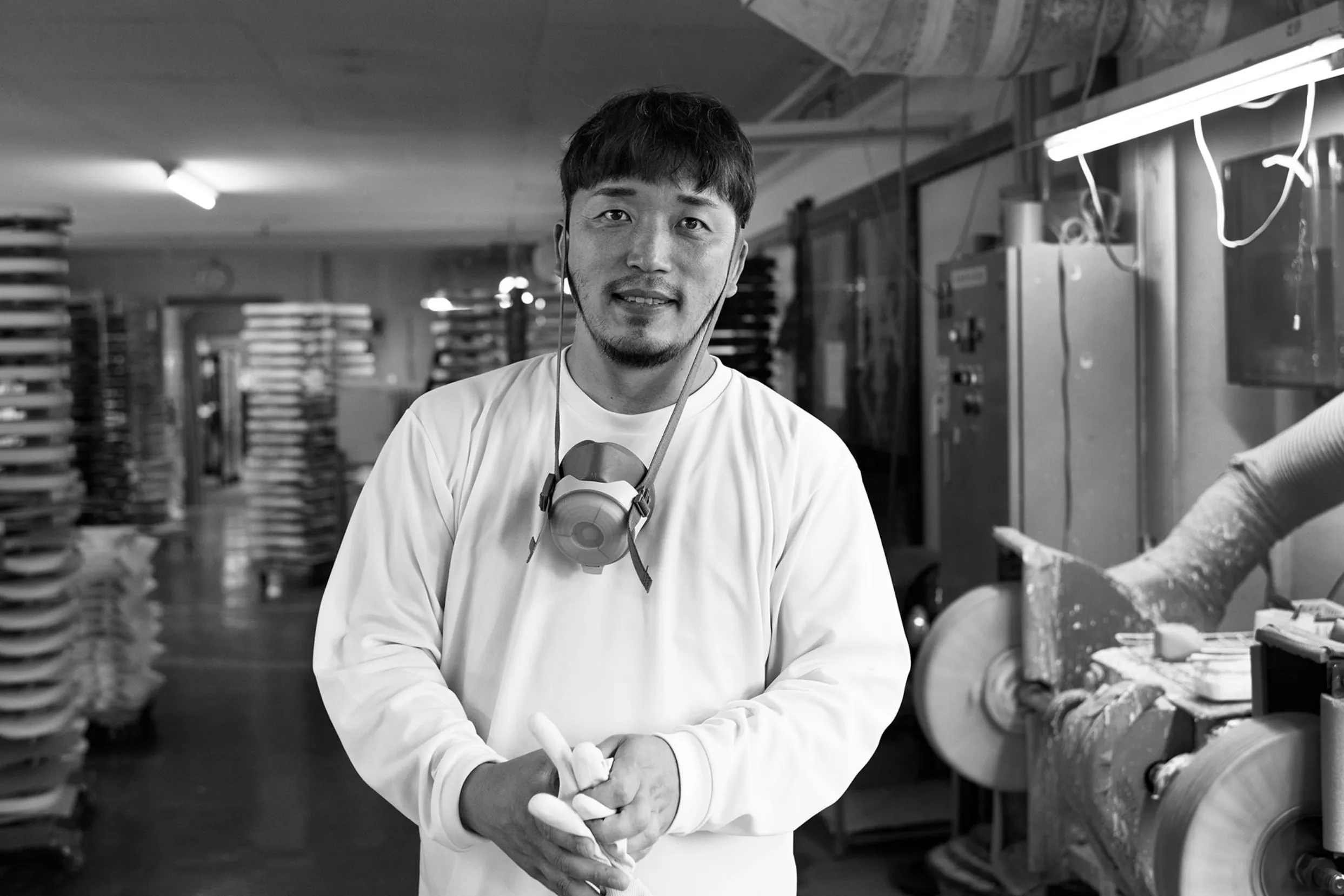
Accumulating Research in Painting Technology
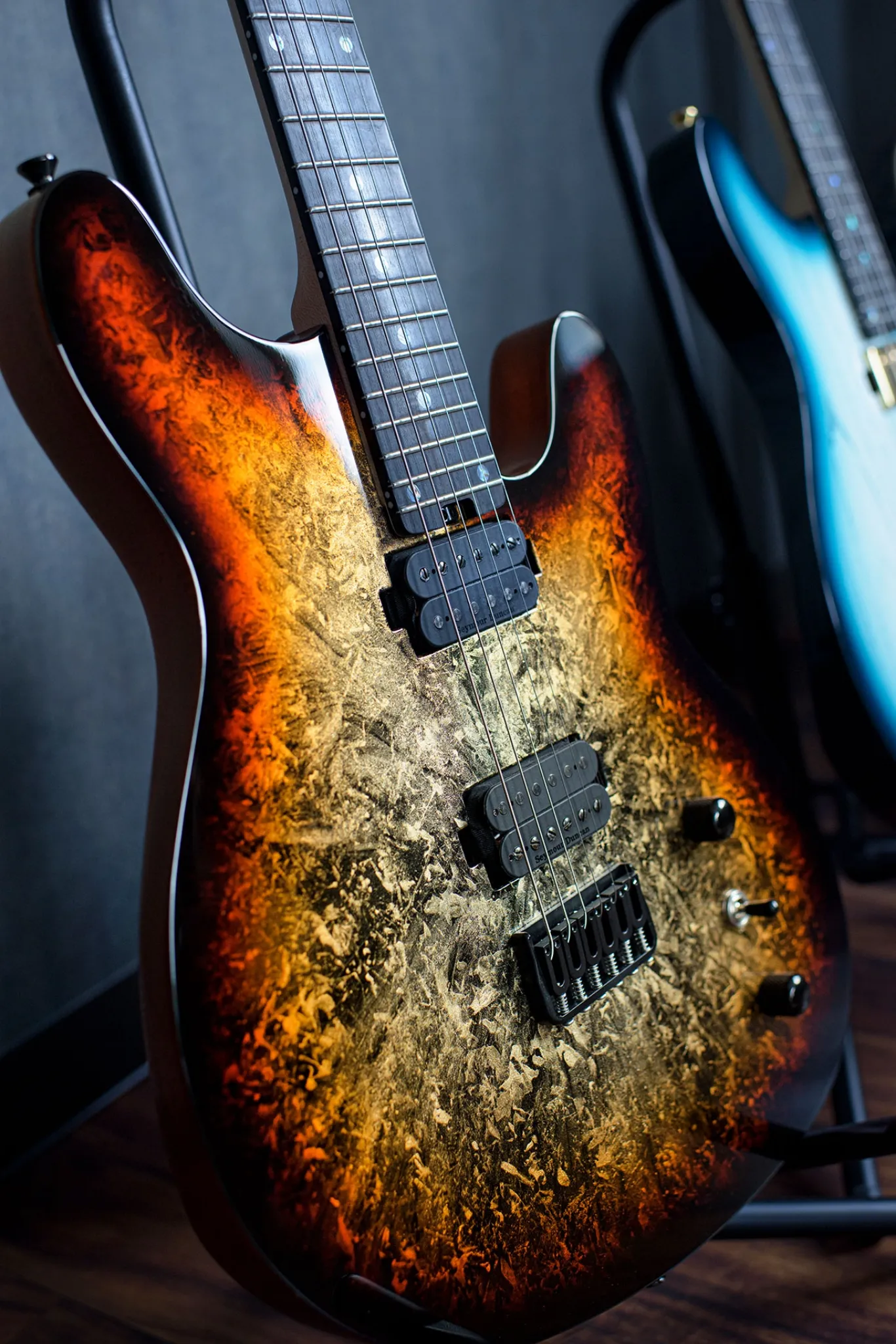
Painting wood differs from painting iron or plastic. This is because wood absorbs paint differently depending on the type, and in cases where the wood grain is visible, it is also affected by the grain. "If it's a single enamel color, there won't be a difference in shade, but otherwise, harmony with the wood grain and color adjustment become very important." To further expand their range of painting techniques, they have been engaged in research on painting technology for about six years. Their research is very unique. For example, they take photos of beautiful moments, such as the sky dyed by a setting sun or the sea sparkling with sunlight, and challenge themselves to express them through painting. It is precisely because of such research that they can reproduce the image in the customer's mind. "Additionally, we are working to intentionally create things that were accidentally produced. By expanding our range of techniques and expressions in this way, we can create things that only Santai can produce."
The 4th Generation's Challenge: Unique Branding
"Santai has challenged itself to become a manufacturer many times. I want to become a manufacturer again by creating our own products." Yuya, the 4th generation, is not just thinking about his own company in this challenge. "If there's a track record of a subcontractor becoming a successful manufacturer, I think other companies might be encouraged to adopt a similar approach." Yuya began this challenge with the revitalization of the manufacturing industry in mind. To that end, he is starting to move towards establishing a cool brand that leverages design, aiming to become a manufacturer that creates new products, not just a subcontractor for guitar painting. Furthermore, he wants to create a system where in-house craftsmen can enter into side-job contracts that utilize their individual passions and strengths. "For example, a craftsman who enjoys making accessories could develop accessory products as a sole proprietorship, sell them under the Santai brand, and receive incentives. I believe craftsmen can enjoy their work by adding creative elements to things they are passionate about." He is trying to create an innovative system that combines the organizational strength of the company with the individual power of the craftsmen. Behind this is Yuya's love for his hometown. Because he loves the city of Shiojiri, he wants to make it a place where industries can thrive, people can continue working, and live there permanently. "For small companies like ours, it's crucial how we add value. I want to leave a success story in our hometown of how a company transformed through product development using niche technologies." Santai, which has continued to take on challenges since its founding, has strengthened its foundation with each new challenge. We look forward to seeing how the 4th generation's challenge, which also involves the local community, will blossom.