Cost-effective and fast machining.
In-house tool production cuts costs.
-
Nakanishi Co., Ltd.
- Precision machining parts manufacturing, jig and tool manufacturing
Hiroshi Nakanishi
- Prefecture
- Aichi
- Business Activities
- Precision machining parts manufacturing, jig and tool manufacturing
- Company Name
- Nakanishi Co., Ltd.
- Representative Name
- Issei Nakanishi
- Location
-
〒468-0045
2-168 Nonami, Tempaku-ku, Nagoya-shi, Aichi, Japan
- Phone Number
- 052-896-5544
- Website
Factory Stories
The Origins of Nakanishi
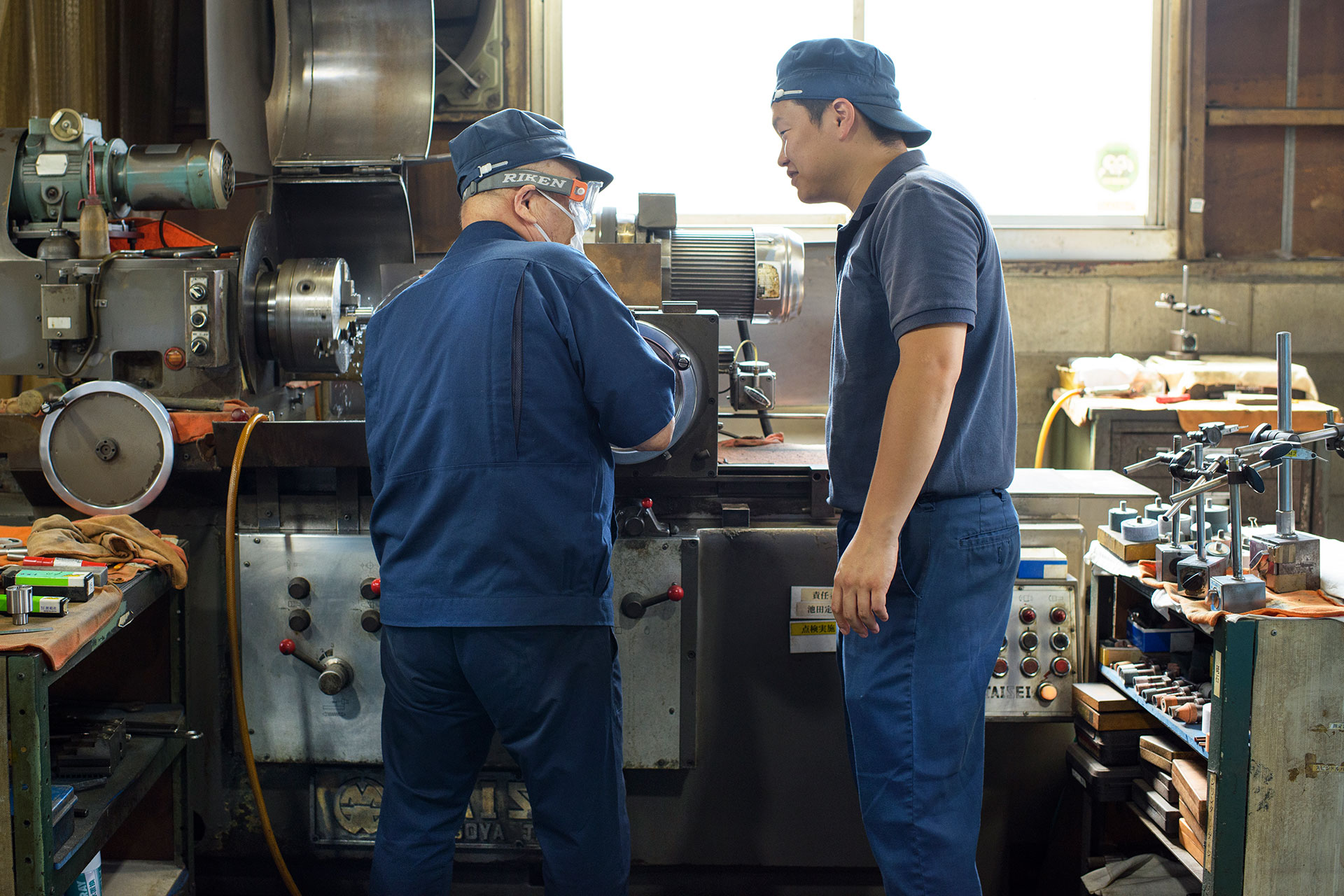
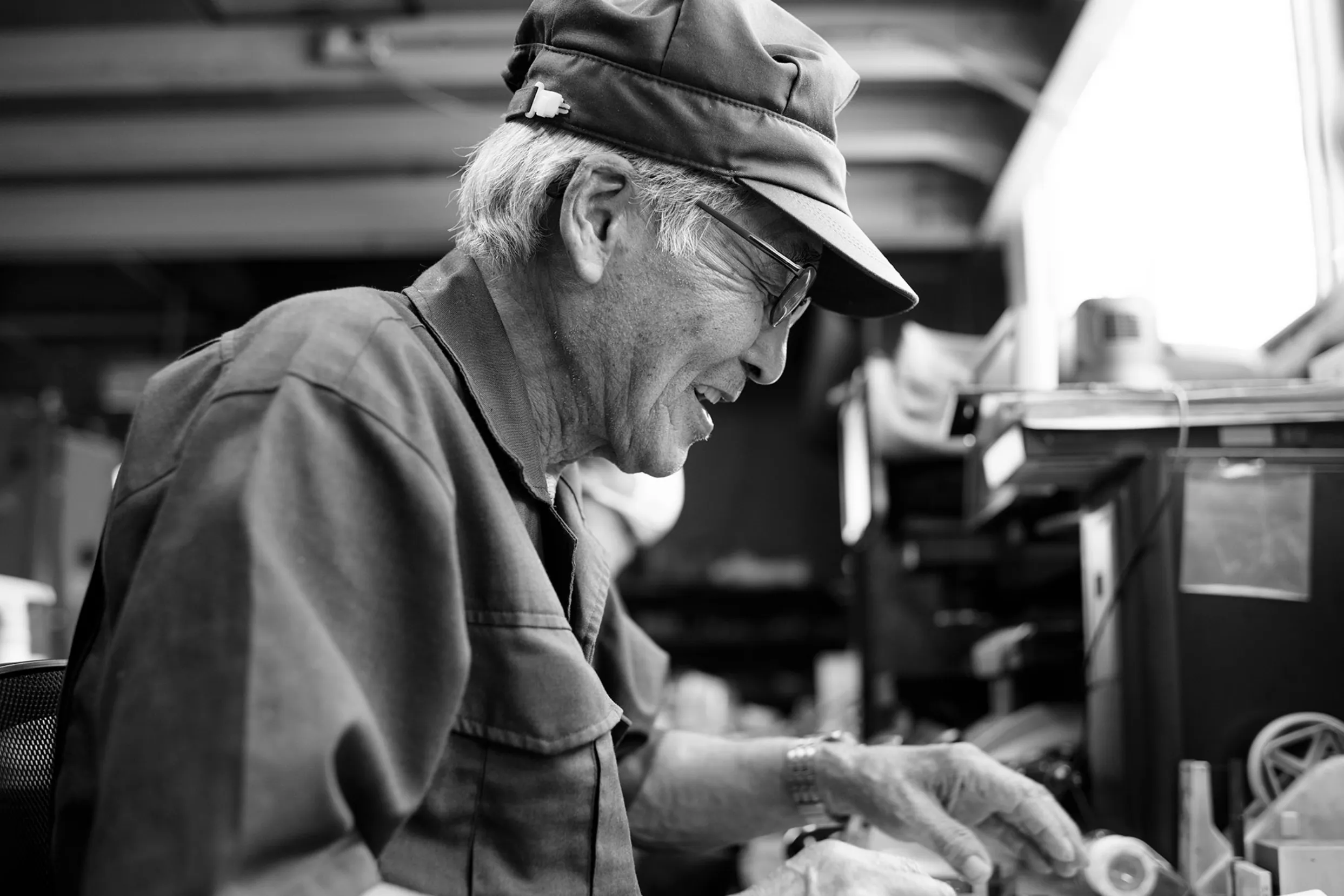
Nakanishi is a company that primarily manufactures precision mechanical parts, also engaging in jig and tool manufacturing.
Hiroshi Nakanishi, the Senior Managing Director, is the grandson of the founder who established Nakanishi Seisakusho Goshi Kaisha in 1964. Currently, his father, Yusei, leads the company as president.
At the time of its founding, the company seemed to focus on machining metals and other materials.
“I haven't heard much about the time of its founding, but it seems the main work was machining castings and iron.”
As we responded to customer requests, we gradually grew into a factory specializing in precision mechanical parts.
A major reason why Nakanishi is chosen by customers is its affordability.
“Among the three important aspects in manufacturing – 'affordability,' 'speed,' and 'quality' – we believe our strengths are 'affordability' and 'speed.'”
The Secret to Affordability: Utilizing General-Purpose Machines
Having strengths in affordability and speed does not mean neglecting quality.
Nakanishi specializes in manufacturing small precision mechanical parts that can be held in one hand.
Therefore, Nakanishi primarily performs machining using general-purpose machines, limiting the use of NC lathes and machining centers only to truly necessary parts, thereby reducing processing costs.
“For example, if you're machining a 100-diameter part down to 30-diameter, NC is faster. However, if you're machining a 13-diameter part down to 10-diameter, there isn't much difference in speed between NC and general-purpose machines. That's why we process such items with general-purpose machines.”
The difference in machining costs between NC and general-purpose machines stems from the difference in initial equipment investment.
“General-purpose machines can be maintained by ourselves, so maintenance costs are also low.”
Because Nakanishi devises ways to machine affordably, its quality is stable. Through grinding, we achieve a tolerance of plus or minus 1/100.
“The factory is generally kept at 20 degrees Celsius. However, since it's not strictly controlled in a constant temperature room, we cannot guarantee meeting tolerances if requested at exactly 20 degrees Celsius.”
Most Machining Completed In-House
There are other reasons why machining costs can be kept low.
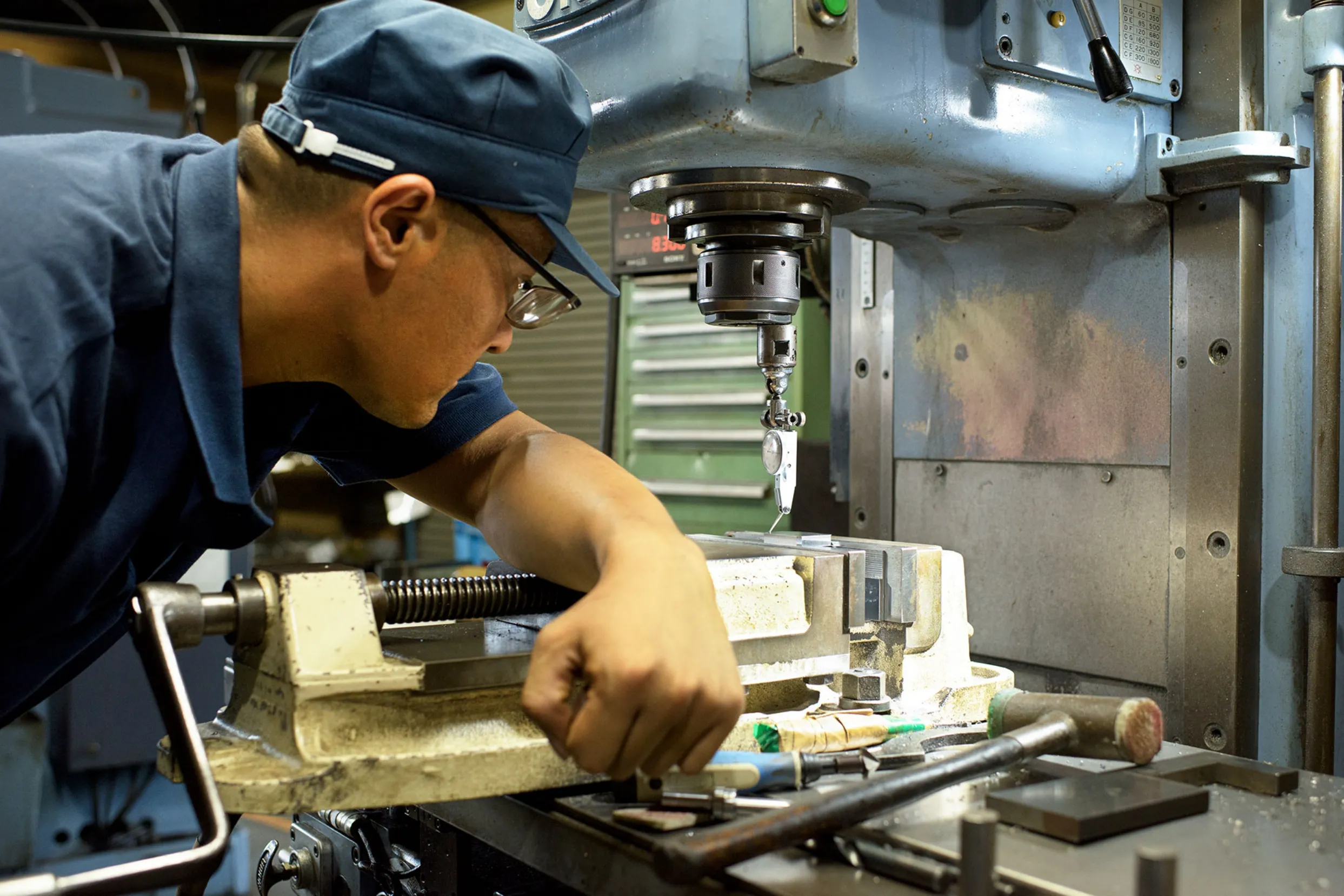
That is, most machining can be completed in-house.
Costs can be reduced because there is little outsourcing to other companies.
Furthermore, since we make our own tools, there is no need to purchase tools for special sizes or shapes.
“The tools for machining precision mechanical parts are very small. For example, a 2mm drill bit is sold, but it's expensive. And because it's thin, it breaks easily. At our company, we make them from carbide scraps, so there are no tool costs.”
Other companies often outsource such machining or purchase tools. Despite this, Nakanishi can handle it in-house because we possess the technical capability to produce precision tools.
Someone from another company once asked to see a tool made by Nakanishi, and we showed it to them. At that time, the person who saw the tool said, 'This cannot be made.'
Tools for In-House Machining
Hiroshi makes the tools.
After joining Nakanishi, Hiroshi began making tools by observing and imitating.
“I experimented with shapes and angles while looking at tools made by my seniors. At first, they often broke even after I made them.”
Through those failures, he repeatedly devised solutions, considering what angles were best, what thickness, and what shape, and spent about a year until he could make tools exactly as he envisioned.
Now, there are also employees challenging themselves to make tools.
While experienced workers can make a tool in about an hour, employees who are just starting to learn take about half a day.
“If there isn't a thicker part, it will break, not just by making it thin. There are parts that should be finished carefully and parts that can be skipped, so I think you'll be able to make them faster once you understand that. However, the time it takes to master it depends not on how many years of machining experience you have, but on your motivation.”
Machining Technology Requiring a Craftsman's Intuition
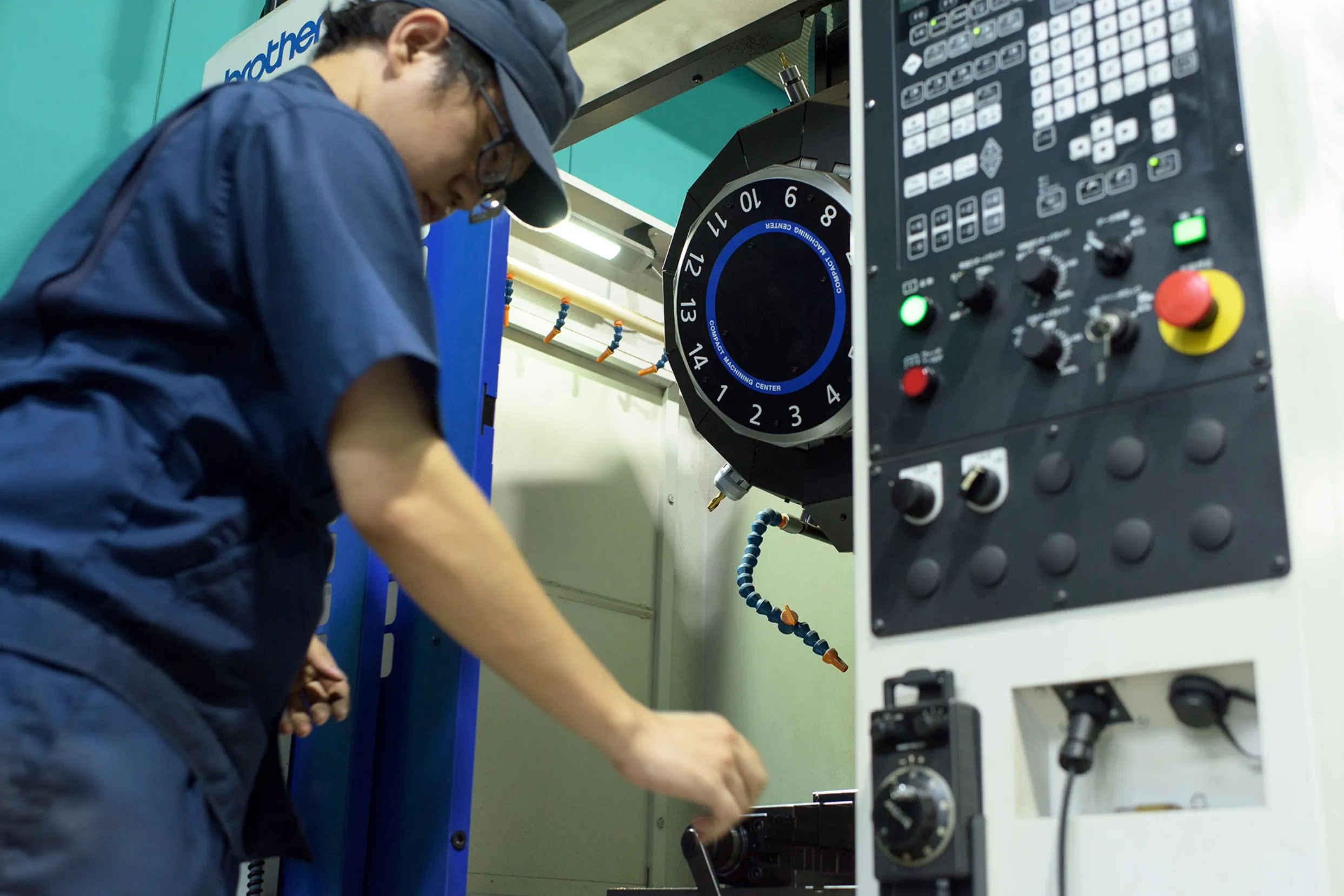
To produce precision mechanical parts from a drawing, one must be able to visualize what tools are required for machining.
And the skill to machine with general-purpose machines is also necessary.
“If an unusual load is applied to the tool, it will break. If you pull back when you feel resistance during machining, it won't break, but it's quite difficult to grasp this sensation. I don't particularly like the expression 'craftsman's intuition,' but it might indeed require an intuition cultivated through experience.”
Machining that Nakanishi estimates can be completed in about two days sometimes takes a week at other companies.
This is because problems such as tool breakage during machining with general-purpose machines lead to rework, such as remaking tools.
To create tools that allow for smooth machining and are resistant to breakage.
And to machine in a way that prevents tools from breaking.
By mastering these two, both machining speed and quality can be improved.
While there are many failures in difficult machining, Nakanishi takes on such challenges precisely because there are things that can only be gained from experience, including these failures.
A Proactive Approach to Challenging Machining
Nakanishi tries to accept as many requests from customers as possible.
“If it's absolutely difficult, there's also the option of using an electrical discharge machine. However, we consider methods that can finish the product as affordably as possible.”
Using an electrical discharge machine incurs both time and cost.
However, if we can make the tools and machine with general-purpose machines, it's possible to reduce costs to about one-fifth of that of an electrical discharge machine.
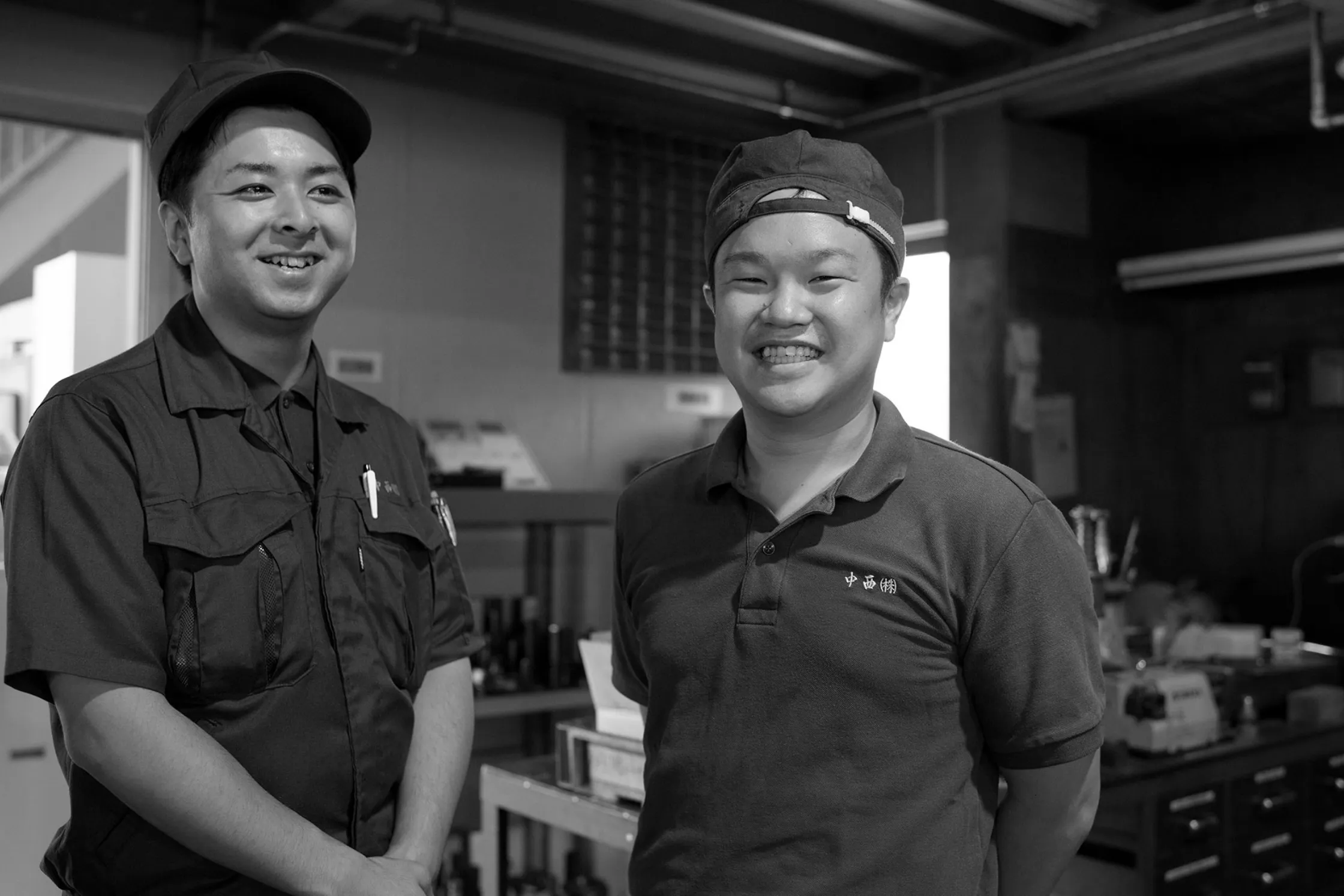
Regarding these efforts to reduce costs, employees have recently started thinking and proposing, 'Isn't this way cheaper?' or 'Isn't this method better?' and taking on challenges.
Nakanishi's Vision
“Going forward, we aim to break away from reliance on a single company.”
Currently, sales from one company account for 80-90%.
“Fortunately, we receive a lot of work, so we don't have time for other things. However, since we don't know how economic fluctuations will affect us, we plan to expand our industry now.”
We are trying to expand our range of business partners without changing our fundamental stance of manufacturing precision mechanical parts primarily through machining with general-purpose machines.
For that, we need craftsmen who can operate general-purpose machines.
“Given the declining birthrate and aging population, I think younger people prefer programming and systems. So, we are considering employing craftsmen aged 60 and over who have skills but are not good at programming. This also helps protect employment.”
There is little difference in the machining that can be done with general-purpose machines or NC machines. The difference is whether it's manual or automatic.
However, the time and cost involved in machining differ significantly.
Nakanishi aims to create an environment where skilled elderly people can work, while also manufacturing high-quality products at reduced costs with those who are striving for technological improvement.
Precisely because automation is advancing, the technology that Nakanishi continues to pass down may gain even more attention.