Refining casting to meet demands.
Our strength: tackling projects
others won't.
-
Miyata Casting Co., Ltd.
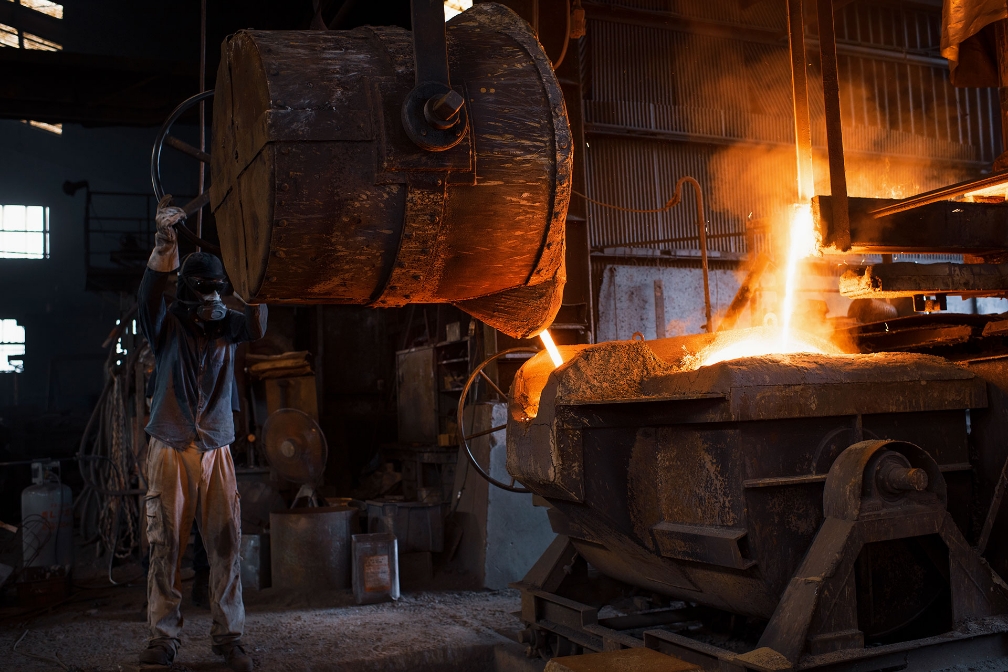
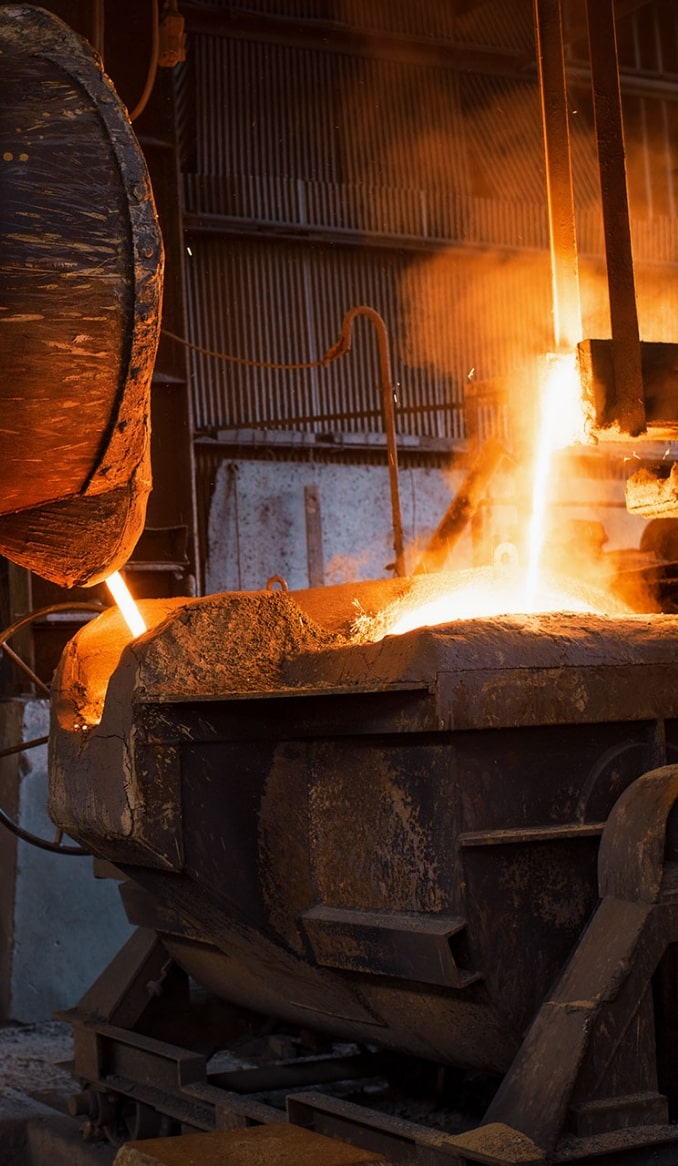
- Casting manufacturing using cupola furnaces, capable of producing thin-walled castings.
Yasuhiro Miyata
- Prefecture
- Aichi
- Business Activities
- Casting manufacturing using cupola furnaces, capable of producing thin-walled castings.
- Company Name
- Miyata Casting Co., Ltd.
- Representative Name
- Yasuhiro Miyata
- Location
-
〒443-0038
25-2 Maehama, Hiroishi-cho, Gamagori-shi, Aichi, Japan
- Phone Number
- 0533-69-3205
- Website
Factory Stories
The Beginning of Miyata Casting Co., Ltd.
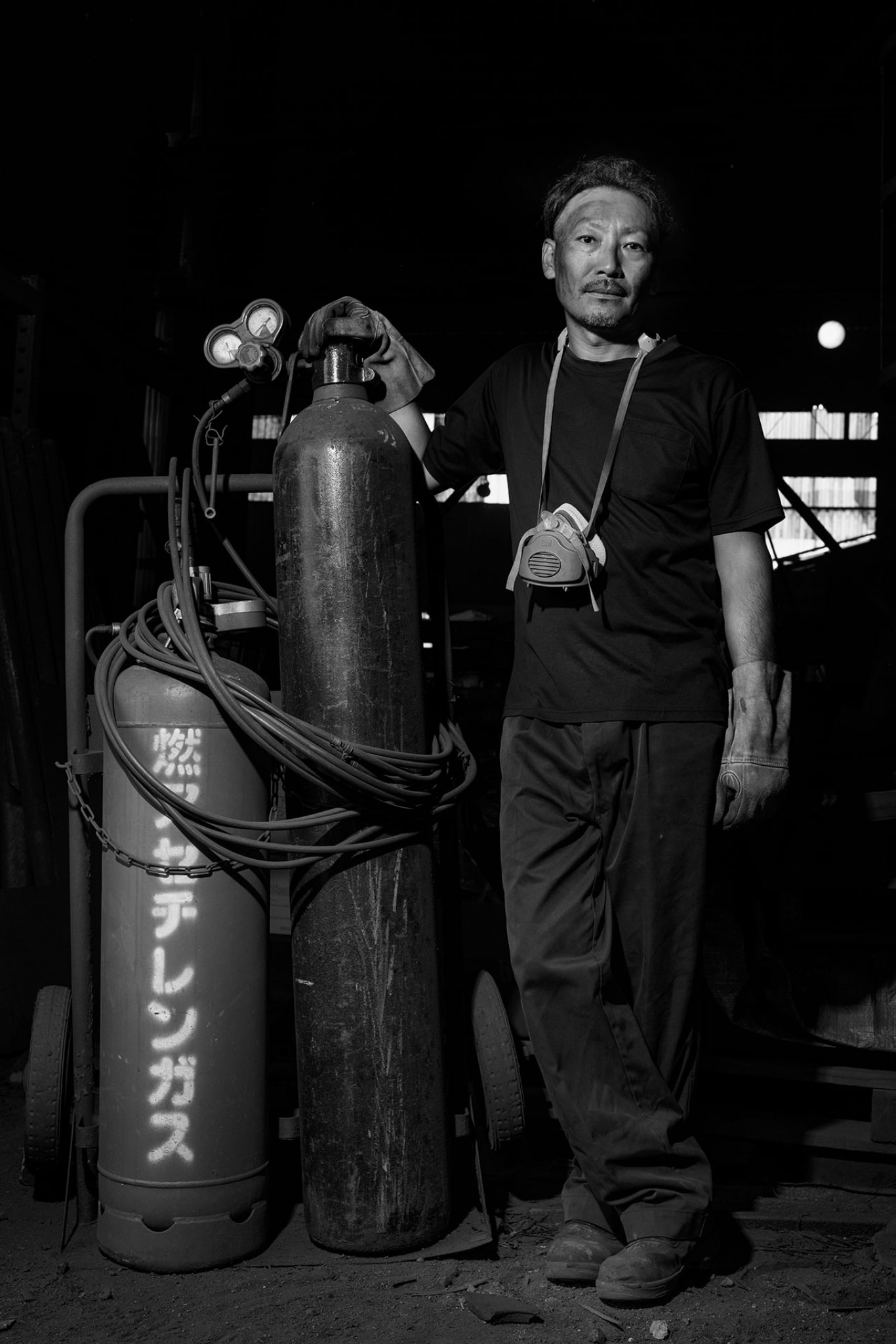
Miyata Kogyo, started by the grandfather of current director Yasuhiro and his two brothers, was the origin. When his grandfather returned from the war, the company had already been established, and he joined it.
In 1970, the manufacturing division was separated from Miyata Kogyo, and Miyata Casting Co., Ltd. was founded. Initially, they specialized in welding technology and manufactured vises.
"Just make good products."
This motto has been passed down through Miyata Casting Co., Ltd. from his grandfather's generation.
It was truly a company of artisans. When Yasuhiro joined, the craftsmen's skills were excellent, but they didn't teach casting technology step-by-step. It was a world where you learned by failing and by observing.
"However, every craftsman took pride in their work. They took full responsibility for the products they made. I believe their commitment to making good products was incredibly strong."
Casting is a Living Thing
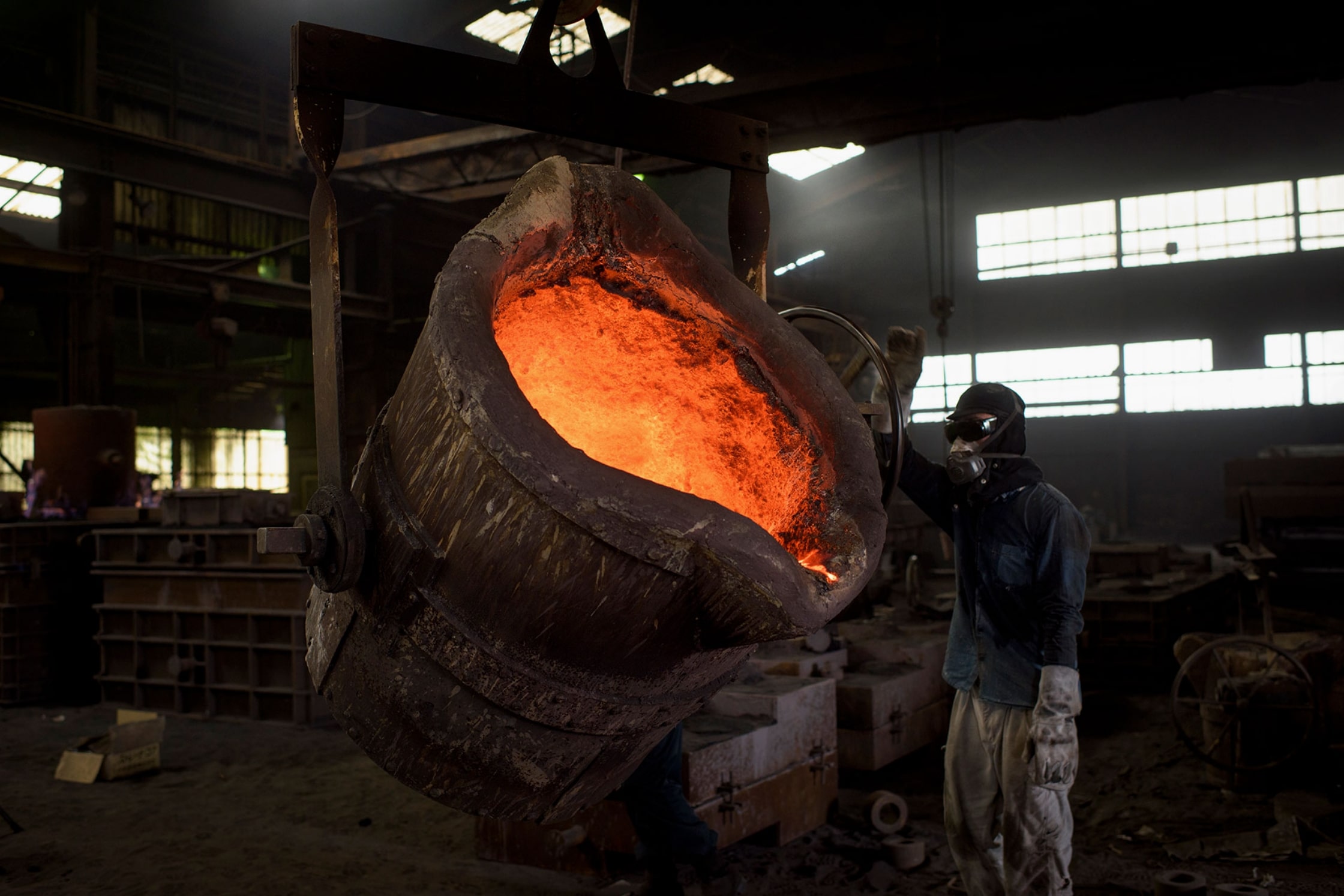
"Casting is a living thing."
This is another phrase I learned from my grandfather. The outcome changes with temperature and humidity, and it's not necessarily beautiful just because you meticulously care for it. Sometimes it sweats, sometimes it breathes.
"I started to grasp it around three years after joining the company. I felt like I had mastered it, but then I saw even more skilled craftsmen around me."
It was a workplace where craftsmen mutually enhanced each other's skills. The desire to master casting technology naturally welled up within me.
With that in mind, Yasuhiro self-studied and obtained the Class 1 Casting Technician certification. He plans to acquire the Special Class Casting Technician certification, aiming for even greater heights.
Honing Skills
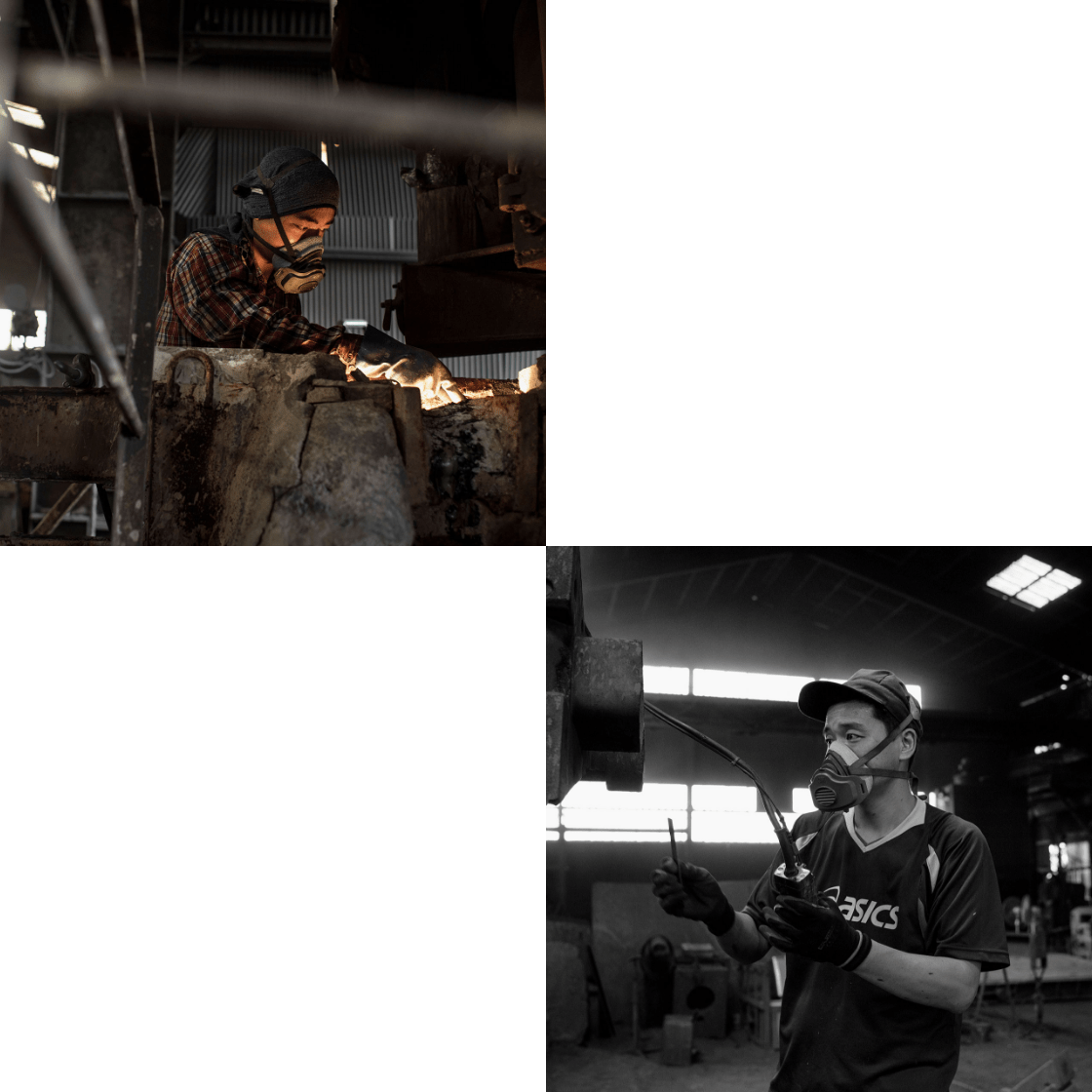
Casting is a delicate art. That skill is reflected in the surface finish of the casting.
"That's yours, isn't it?"
When identical products are lined up, craftsmen can immediately tell which one they made just by looking.
"Before setting the core, we apply a mold coating agent, and depending on the application technique, the surface finish of the casting can be incredibly beautiful or rough."
Even if produced in the same process and at the same speed, a slight difference can lead to a significant difference in the final finish; that is the world of casting.
There's something important for achieving a beautiful finish.
"To achieve a beautiful surface finish on castings, the application of the 'makeup' is key. Craftsmen cherish the brushes they use to apply this 'makeup.' They can immediately tell if someone else has used their brush. It's that delicate."
This 'makeup' refers to applying graphite to the sand. It's not about applying a lot; rather, it's about finishing it as if crushing and applying wax. The concentration of the coating material is also crucial. While a Baume hydrometer now makes concentration control easy, in the past, craftsmen determined it by feel when mixing. The appearance of castings is supported by such artisanal skills.
Miyata Casting Co., Ltd.'s Strengths
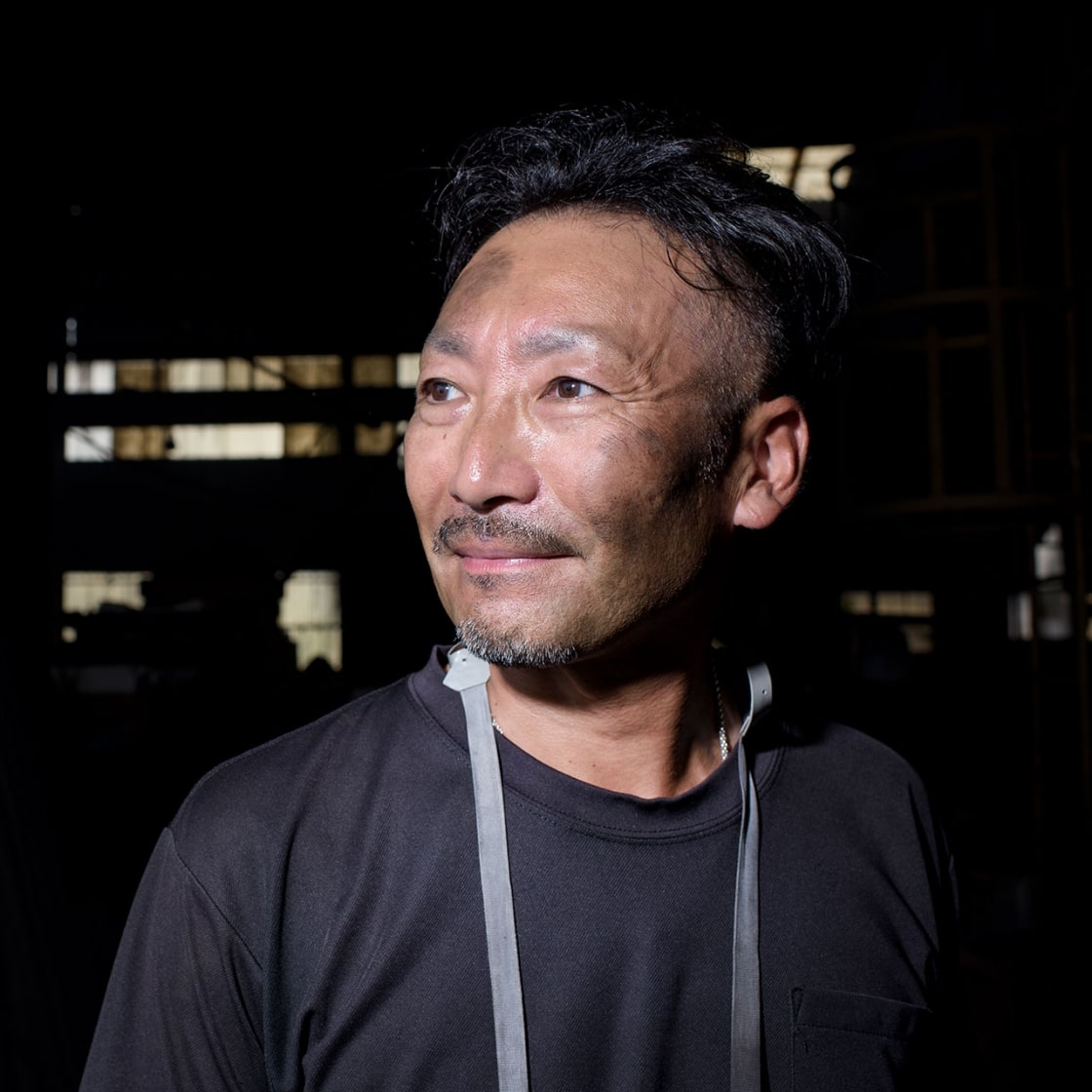
"Miyata Casting Co., Ltd.'s strength lies in our ability to produce what other companies are reluctant to do."
As final products demand lighter weight, the challenge is how to lighten casting components. However, making thin-walled casting components is not easy.
"To produce thin-walled items, the molten metal temperature must be raised. However, producing thin items at high temperatures can cause sand to burn on. Miyata Casting Co., Ltd. uses a special furnace that allows for good molten metal flow even at low temperatures. This enables us to beautifully finish thin-walled products."
Typically, a casting component thickness of 15㎜ is considered thin. If it's thinner than that, cracks can occur, rendering it unusable as a product.
However, Miyata Casting Co., Ltd. can finish thin-walled products down to 8㎜. Solving requests that are difficult for other companies with skillful technology is Miyata Casting Co., Ltd.'s strength.
Why Are We Chosen?
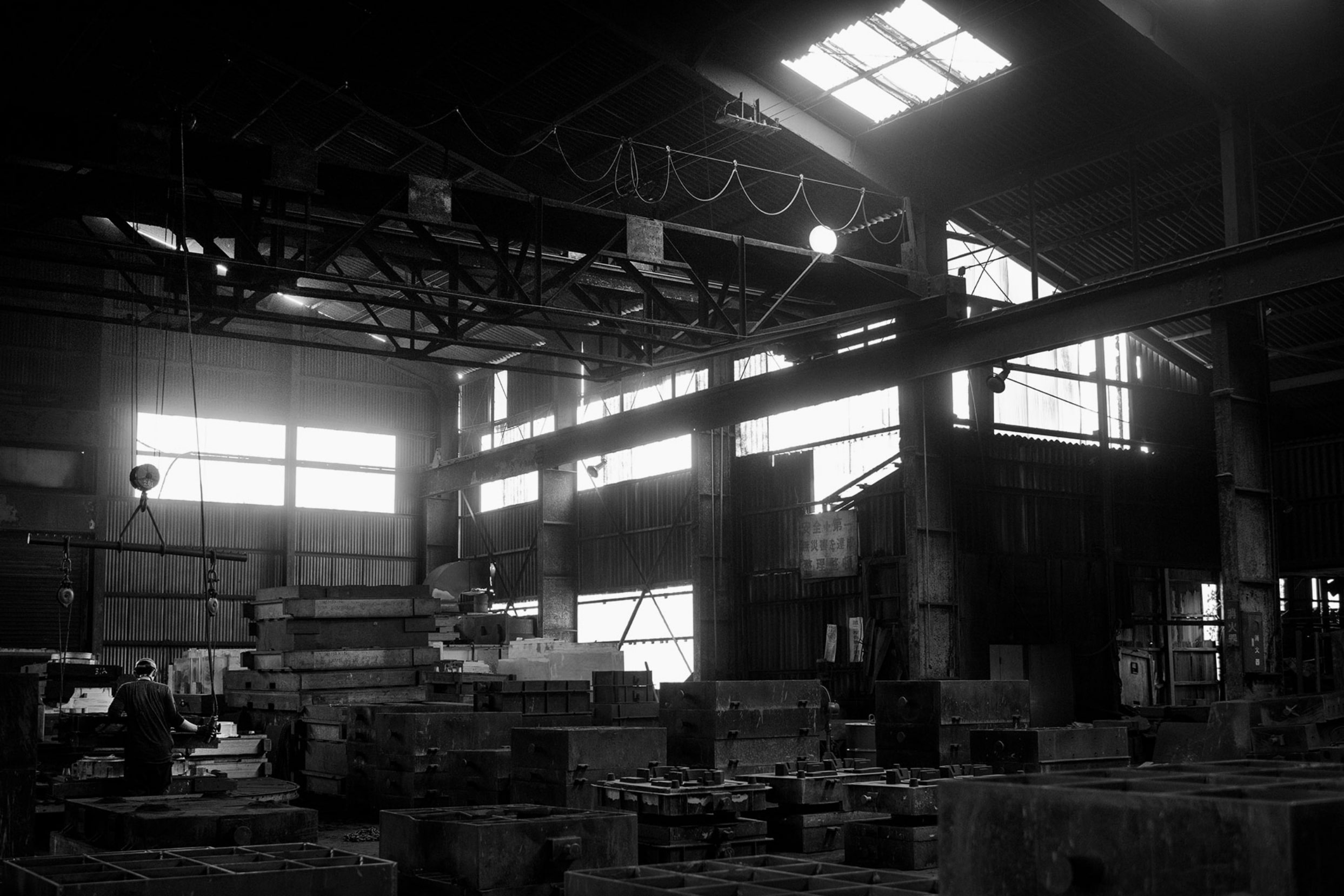
Along with product quality, there's something else we value greatly: lead time.
"Sometimes, customers make unreasonable requests. However, at the same time, it means our important customers are in trouble. In such situations, we don't want to say no. We will definitely meet the deadline."
Miyata Casting Co., Ltd. values communication with its customers.
We invite various departments, including not only design but also procurement and production engineering, to our company to help them understand Miyata Casting Co., Ltd. We want them to know that products don't just appear silently after an order is placed; they also understand the challenges on the factory floor. It is precisely because of this trust built on mutual understanding that we always respond to our customers' requests.
The Future of Miyata Casting Co., Ltd.
"I want to change the world of casting."
Casting is a world where old customs persist. Compared to the past, products are now required to be thinner and more precise. However, even today, the value of a product is still determined by its weight, often referred to as "per-kilogram sales."
"Whether it's a light product or a heavy one, the process remains the same. Therefore, the thinner the products we make to meet customer demands, the less profit we earn. We cannot continue like this."
If the cultivated technology is not properly evaluated, excellent casting technology cannot be passed down to future generations.
We have such a sense of crisis.