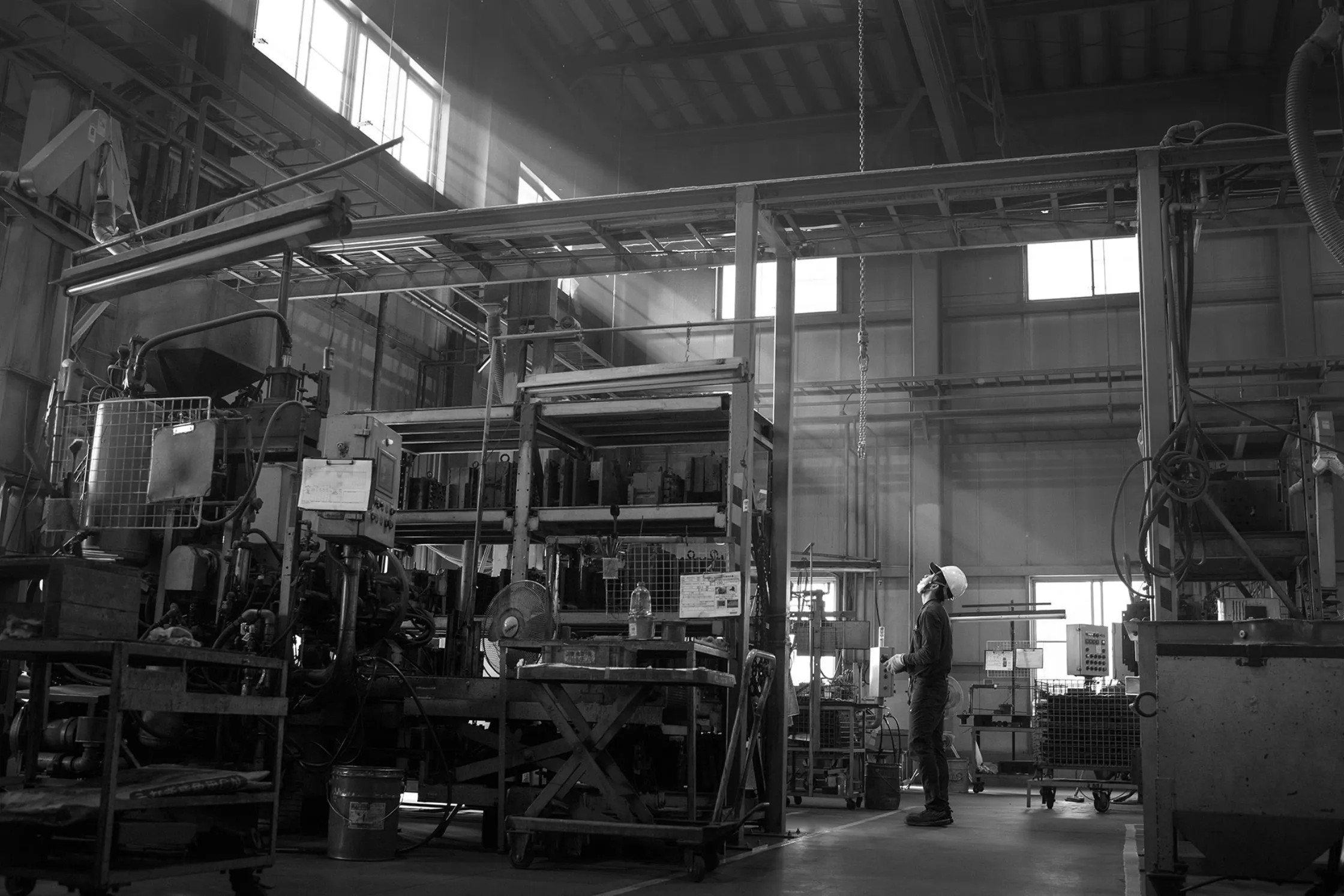
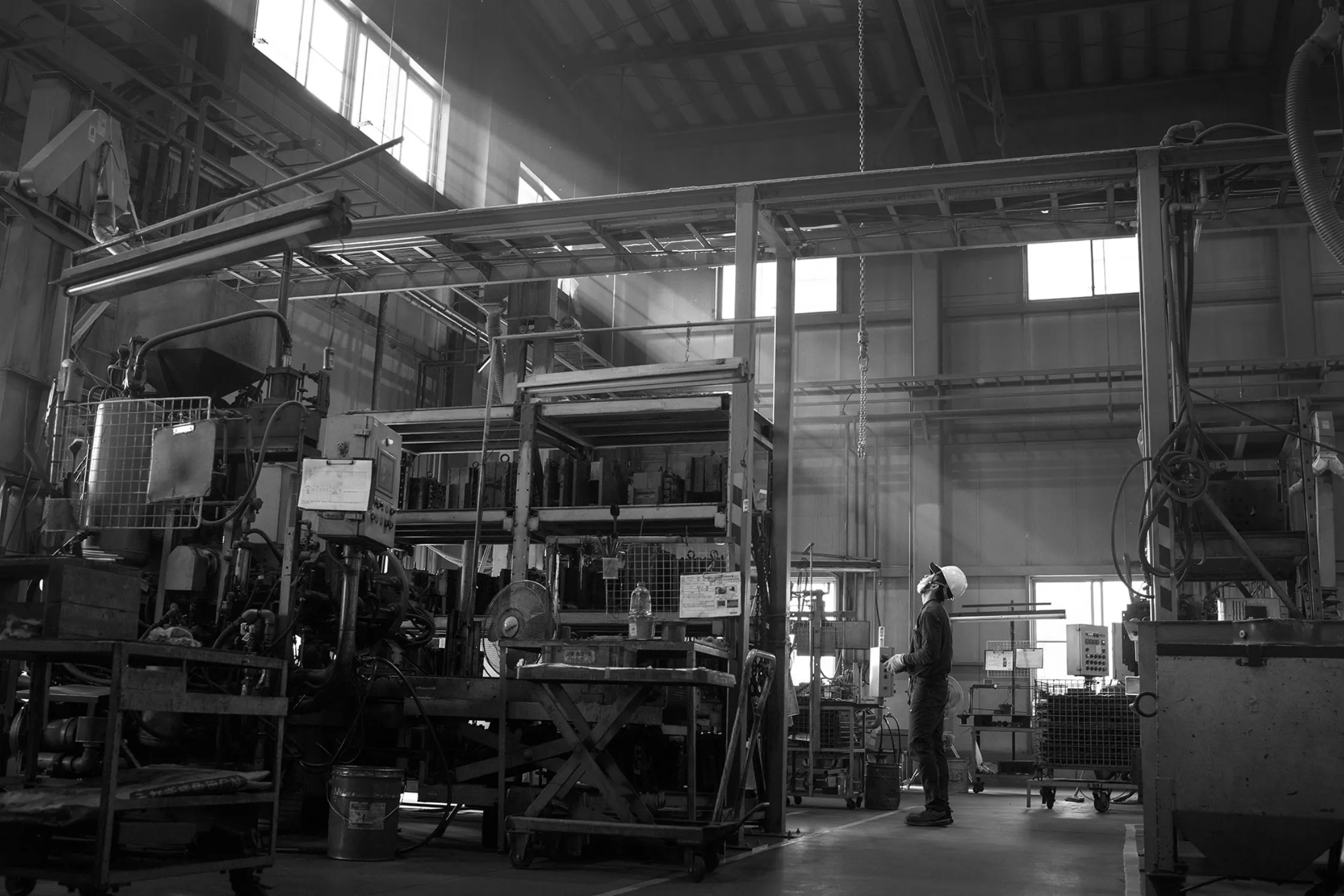
High-precision cores produced with proprietary machinery. Leveraging two distinct manufacturing methods to meet customer needs.
-
Kokuryu Sangyo Co., Ltd.
- Manufacturing of sand cores for casting
Keiko Asano
- Prefecture
- Aichi
- Business Activities
- Manufacturing of sand cores for casting
- Company Name
- Kokuryu Sangyo Co., Ltd.
- Representative Name
- Keiko Asano
- Location
-
〒444-0335
6-4 Minatomachi, Nishio-shi, Aichi, Japan
- Phone Number
- 0563-58-8400
- Website
Factory Stories
Core Manufacturer Supporting Casting
Kokuryu Sangyo Co., Ltd. has been producing cores, which are inserted into hollow parts during casting, since its establishment in 1964.
The founder was the grandfather of Keiko Asano, the third-generation president.
"My grandfather was originally a fisherman. He founded the company using compensation money from the Hekinan land reclamation."
The company name is said to have been taken from 'Kokuryu Maru,' the ship my grandfather used for fishing.
"My grandmother's family ran a core business, so my grandfather seems to have learned the trade there. Although my grandfather was the founder, my father also started working with him right after graduating from junior high school, so it might be fair to say that my grandfather and father founded the company together."
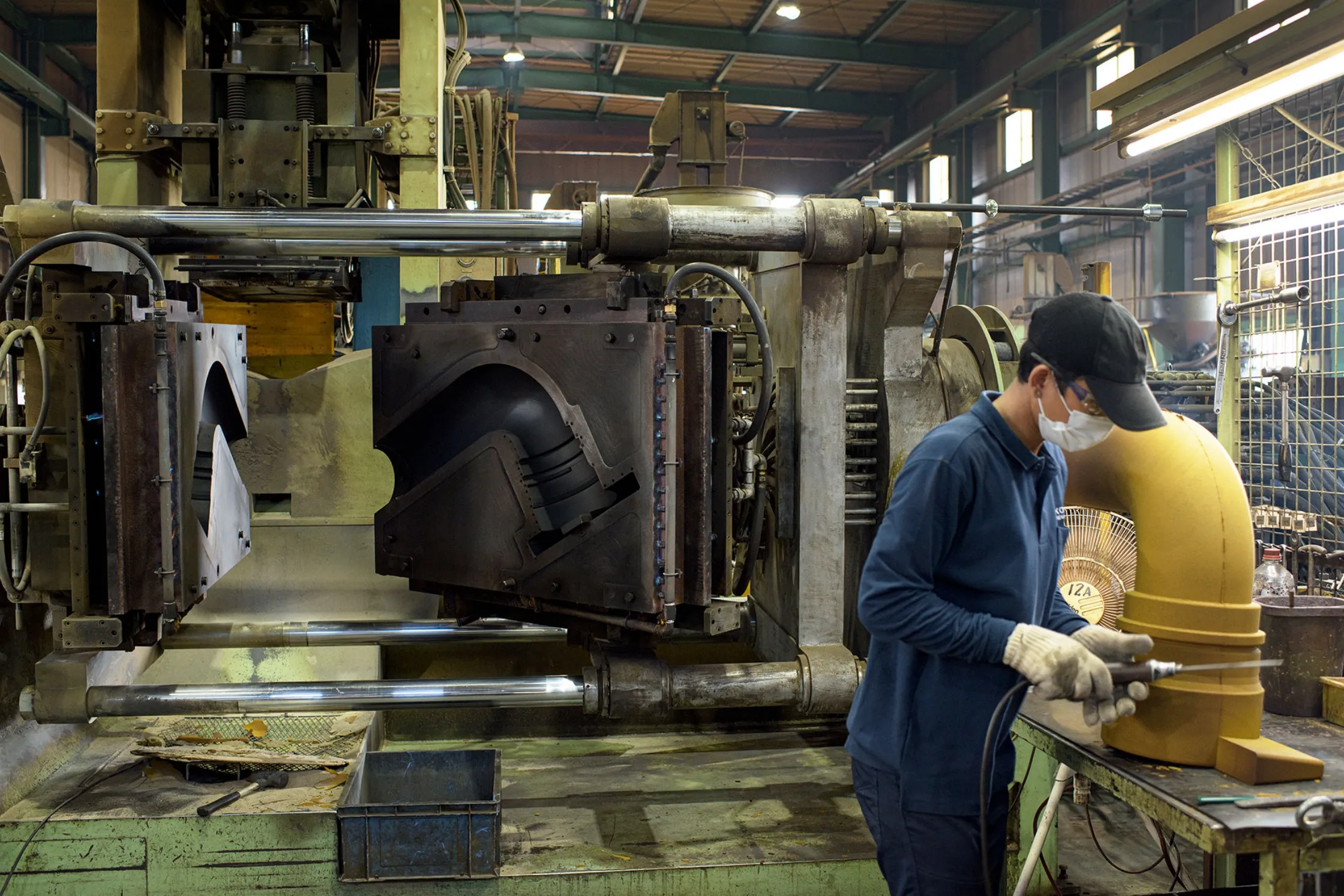
While they produced cores using the shell molding method, which is common for core manufacturing, they also began producing cores using the amine cold box method in 1983, at the suggestion of her father.
This cold box core remains a significant strength of Kokuryu Sangyo Co., Ltd. today.
A Succession Complicated by Family Ties
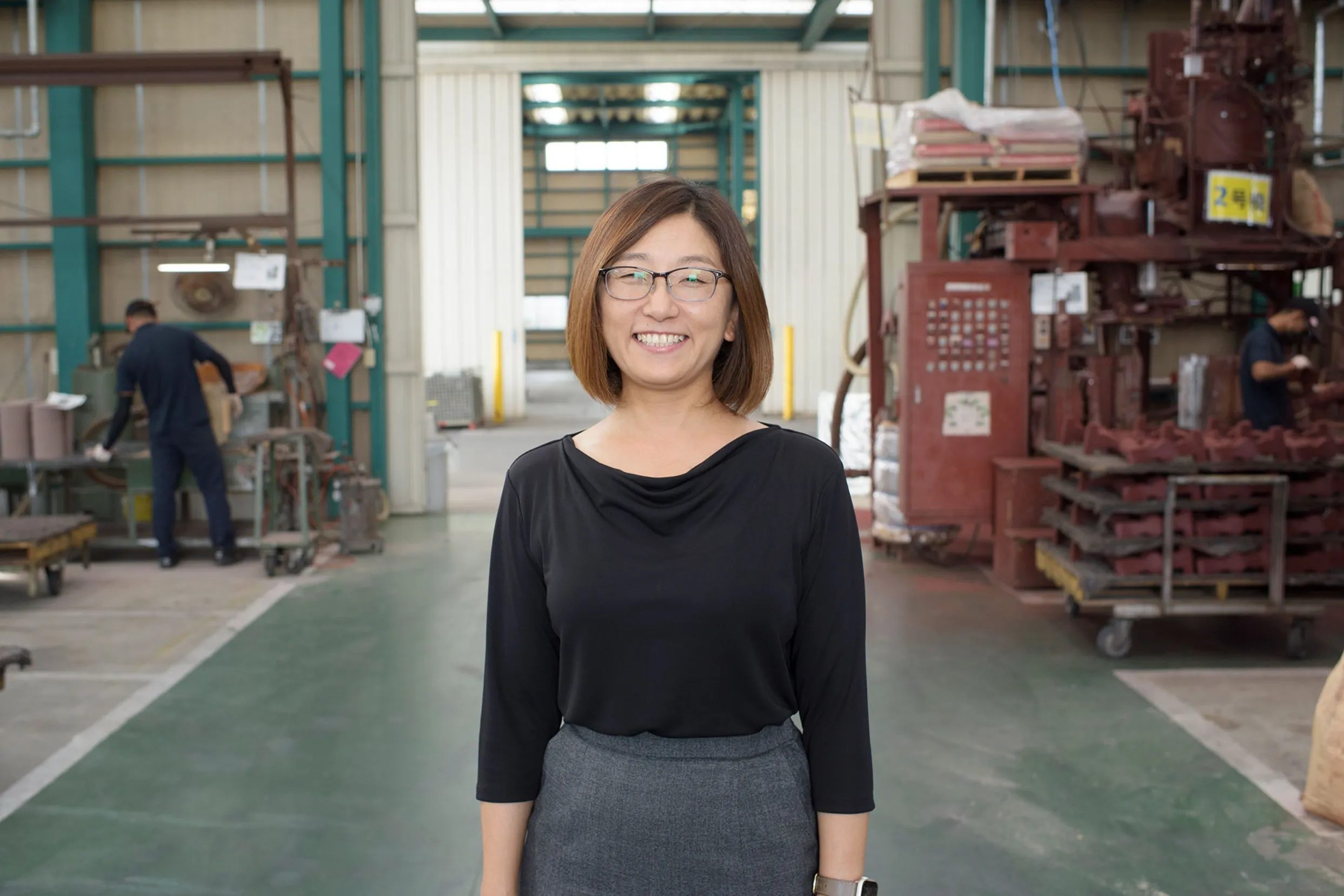
Asano joined Kokuryu Sangyo Co., Ltd. in 2006 and was in charge of accounting.
At the time, she had not considered taking over the company, as her younger brother, the eldest son, was expected to succeed.
However, when her eldest brother left the company, the succession issue arose.
Most of the employees at Kokuryu Sangyo Co., Ltd. were relatives, including Asano's husband, her younger brother (the second son), her uncle, and cousins.
"There was an option for my second brother to take over the company, but he has the temperament of a craftsman, so it was decided that it would be better to entrust him with the factory floor rather than the entire company."
At the time, the factory floor operations were structured such that cousins primarily handled shell molding, and the second brother primarily handled cold box.
When considering the company as a whole, Asano was chosen as the most suitable candidate for president.
"When I became a director in 2014, I resolved to take over the business."
One year later, in 2015, Asano assumed the presidency.
Improving the Internal and Working Environment
What Asano focused on after becoming president was improving the internal environment.
This was an area that had been put off for a long time due to the company being family-managed.
While family businesses have a unique bond, they can also become overly familiar.
She proceeded with improvements one by one, including internal communication, 5S initiatives, and the installation of fences around the premises.
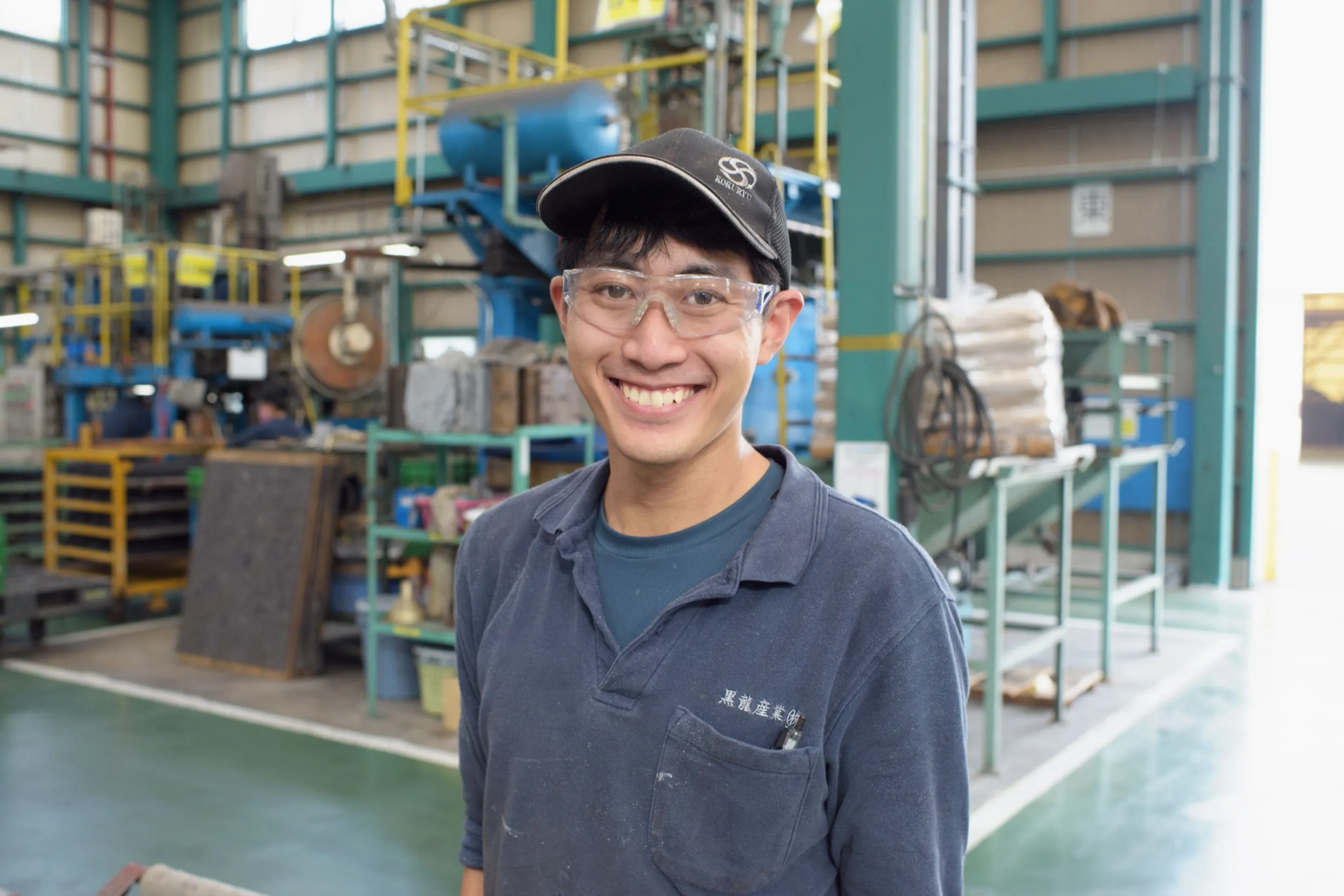
As a result, they began recruiting new graduates in 2021 and successfully hired new graduates in 2022 and 2023.
"Because I thought that looking at the average age, the company would decline if things continued as they were. With the new hires, the atmosphere within the company has also changed."
Furthermore, they plan to purchase one new machine and rearrange the factory layout in fiscal year 2024.
This is to reduce the physical burden on workers involved in cold box core manufacturing, which is quite demanding.
Asano aims to increase the proportion of cold box orders in terms of sales.
However, since it is physically demanding, the more work there is, the greater the burden on the workers.
Asano is strengthening the company's foundation by creating a comfortable working environment, preparing to take the next step.
Features of the Cold Box Method
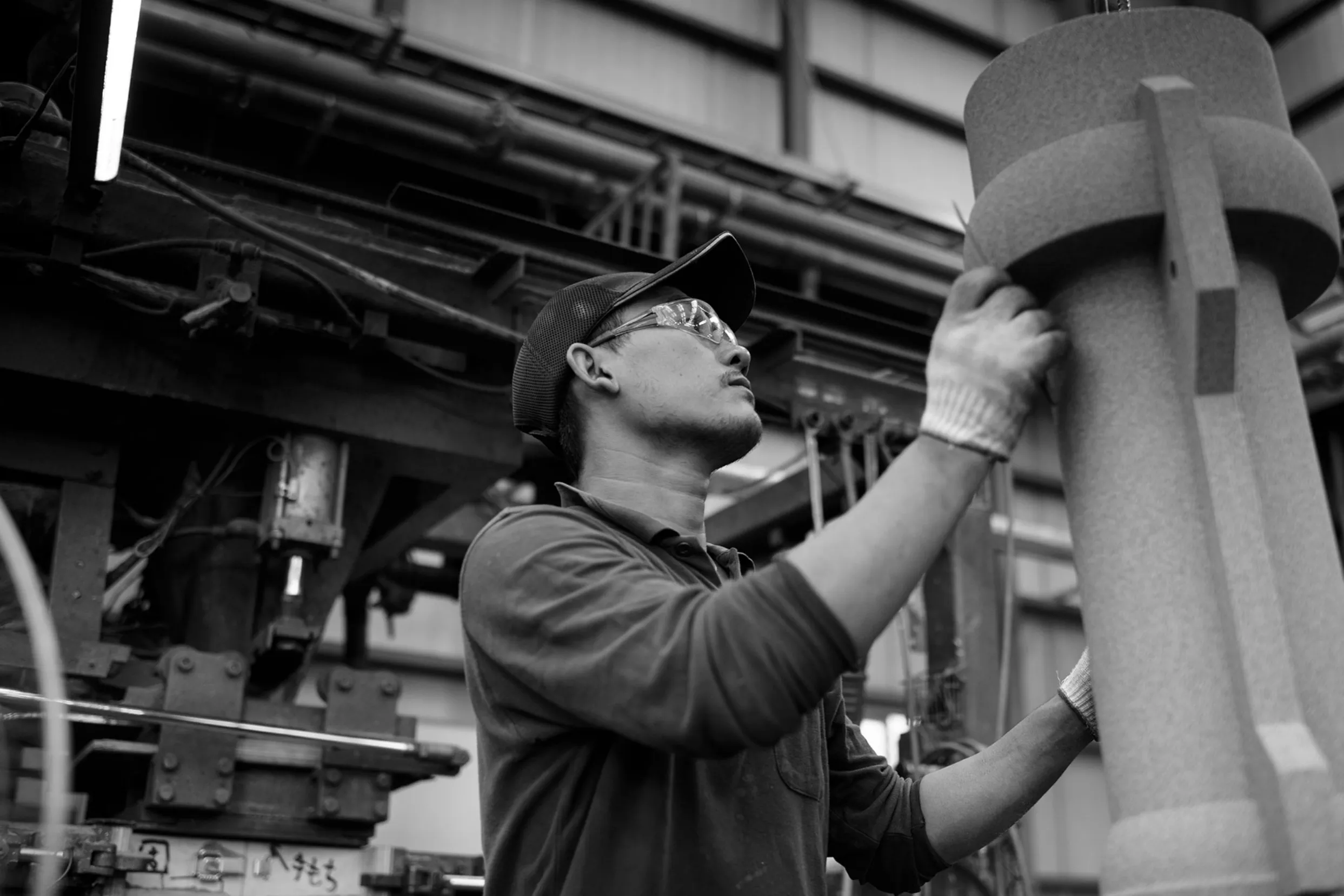
There are two types of core production: 'shell molding' and 'cold box'.
In 1983, when Kokuryu Sangyo Co., Ltd. introduced the cold box method, there were almost no companies in Japan capable of using it.
Therefore, there was strong opposition from within the company.
"Even now, shell molded cores are the mainstream. In terms of sales ratio, shell molding accounts for 60% and cold box for 40% at our company. I want to shift this to around 5:5 or even 4:6."
This is because the cold box technology and know-how are a major strength of Kokuryu Sangyo Co., Ltd.
Generally, in the cold box method, sand is blown onto a wooden pattern to form the core.
However, Kokuryu Sangyo Co., Ltd. modifies its own machines to form the core by suctioning sand.
"The way sand fills the wooden pattern is different. In our method, the finished product has high precision and can accommodate complex shapes."
Customers Can Choose the Manufacturing Method
Shell molding and cold box methods have different advantages. For example, with shell molding, if the core is relatively light and for mass production, the unit cost can be kept low. On the other hand, with the cold box method, the core has high dimensional precision, and for small quantities, the unit cost can be kept low.
"For example, even for small quantities like 5 or 10 pieces, shell molding requires heating the mold to 300 degrees, which results in a longer lead time. This increases the unit cost. Therefore, for small quantities, the unit cost of cold box is lower. Conversely, for quantities of hundreds or thousands, the unit cost per piece is lower with shell molding."
Kokuryu Sangyo Co., Ltd.'s strength is that customers can choose between cold box or shell molding according to their production needs.
"Customers who use both methods choose which to use while prototyping, depending on differences in product size and shape."
Being able to select the appropriate manufacturing method based on price, quality, and other factors must also be an advantage for casting companies.
Developing New Needs for Cold Box
Kokuryu Sangyo Co., Ltd. aims to increase the sales ratio of cold box because there are other core manufacturers that perform shell molding.
Instead of competing there, they plan to strengthen the company as a whole by reinforcing the cold box method, which others are not focusing on as much.
"Among casting manufacturers, some produce large cores or prototyping cores in-house. However, core production requires space, so I believe there is a need for our cold box method when they want to increase production volume or improve efficiency."
By leveraging the features of the cold box method to develop new needs, they aim for further sales expansion.
Strengthening Vertical and Horizontal Connections
Asano is not optimistic about the casting industry.
"The number of foundries closing down is increasing. As automotive electrification (EVs) progresses, the number of necessary parts will likely decrease. Nevertheless, I don't believe casting will ever disappear completely."
As the industry size gradually shrinks, Asano emphasizes strengthening vertical and horizontal relationships.
"If we don't foster closer relationships with our customers, we won't receive information. I believe obtaining information is crucial for planning our future."
And building good relationships with competitors is also important.
"About 20 years ago, we competed as rivals, but now I believe it's necessary to become a community where we can collaborate through horizontal connections."
Kokuryu Sangyo Co., Ltd.'s cold box technology will play a significant role in enabling mutual collaboration by leveraging each other's strengths.
"Until now, we have focused on improving our internal environment and solidifying our foundation, so from now on, I hope to be able to envision a bit further ahead."
Securing young talent is a challenge in the manufacturing industry.
Amidst this, Kokuryu Sangyo Co., Ltd., which has been able to hire new graduates by improving its internal environment, may be ready to embrace new opportunities and make a leap forward.

Kokuryu Sangyo Co., Ltd.
- FACTORY SEARCH RADIO
-
-